Choosing a filter plate is not a minor specification detail. It changes how a press handles slurry, forms a cake, and uses each cycle. The question “what is the difference between chamber and membrane filter plates” therefore matters in real operating conditions, not just on a equipment drawing. A chamber plate holds slurry in a fixed recessed cavity; a membrane plate adds a flexible diaphragm that can squeeze the cake after filling. That extra step may remove more water, but it also requires compatible controls, utilities, and plate design.
The U.S. EPA’s Design Manual: Dewatering Municipal Wastewater Sludges (1987) discusses filter pressing within the wider context of mechanical sludge dewatering. It emphasizes practical factors such as feed characteristics, solids capture, and cake handling. Those factors help explain why no plate type guarantees the same result across every application. A sticky mineral slurry and a compressible biological sludge may respond very differently, even at the same pressure. The membrane squeeze can shorten drying or improve cake solids in suitable processes, yet its benefits depend on the feed, cloth, and cycle settings. More equipment, too. A dry-looking cake does not automatically mean lower total operating cost. That distinction deserves careful testing, and sometimes the first estimate is wrong. The sections ahead compare plate construction, filtration stages, performance trade-offs, and selection criteria, so buyers can assess both the promised gains and the practical limits.
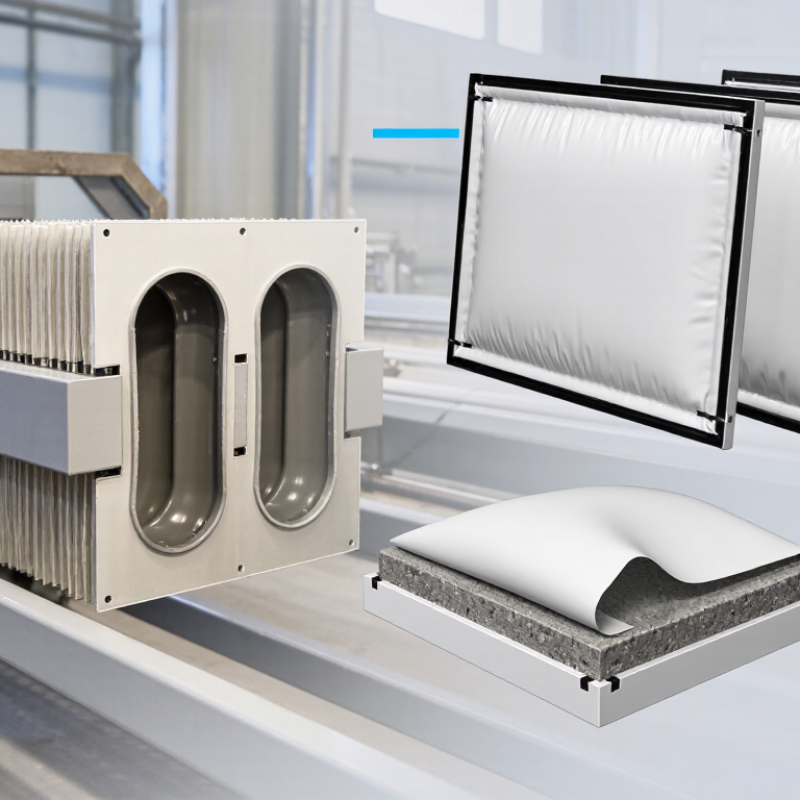
Filter Press Plates and Their Role in Solid–Liquid Separation
What Is the Difference Between Chamber and Membrane Plates?
Filter Press Plates and Their Role in Solid–Liquid Separation
Filter press plates hold the filter cloth in place and create drainage paths for liquid. When clamped together, chamber plates form recessed spaces where incoming slurry collects. Solids build into a filter cake, while liquid passes through the cloth and exits through plate channels. Simple in design. Their fixed cavity depth sets the space available for cake formation.
Membrane plates add a flexible diaphragm to the chamber. After the initial filtration stage, pressure behind the diaphragm compresses the cake and can remove more liquid. This may shorten drying time, but results depend on the slurry, cloth, and operating conditions. A wet cake is not always caused by the plate; feed consistency and blocked drainage paths matter too. The difference is practical, not cosmetic.
Tips: Check cloth condition and plate alignment before a cycle. Match plate type to the material and desired cake moisture. If filtration slows, inspect the drainage channels; small blockages are easy to overlook.
How Chamber Filter Plates Are Built and Operated
A chamber filter plate has a recessed face on each side. When two plates close together, their recesses form a chamber for solids. Filter cloth covers the plate faces, while small ports guide the incoming slurry and drainage channels carry filtrate away. The plate body must resist operating pressure and hold its shape; worn cloth or blocked channels can reduce performance.
During operation, a pump feeds slurry into the closed plate pack. Liquid passes through the cloth and exits through the drainage paths, while suspended solids collect inside the chambers. The cake gradually thickens. Once the feed cycle ends, the press opens and the cakes are removed. It is a simple sequence, but cloth condition, feed consistency, and closing pressure all affect the result. Small changes matter.
A membrane plate differs because it has a flexible diaphragm that can press against the cake after filtration. A standard chamber plate has no such squeezing step; its chamber simply fills and drains under feed pressure. In practice, the ideal cycle is rarely perfectly tidy: cakes may stick, and drainage can vary across the pack. Operators often inspect cloth seals and filtrate flow between cycles. That routine detail is easy to overlook.
Chamber vs. Membrane Filter Plates
Typical number of flexible membrane faces per plate
Chamber plates use rigid recessed faces that form filtration chambers when stacked. Membrane plates add flexible faces—typically two per plate—that can be inflated after filtration to compress the cake and help remove more liquid. Plate designs vary; inflation media and operating pressures depend on the equipment.
How Membrane Filter Plates Add a Squeezing Stage
What Is the Difference Between Chamber and Membrane Plates?
Chamber plates form fixed-volume spaces where slurry enters and liquid drains through filter cloth. As solids build up, they create a cake inside each chamber. Membrane plates add a flexible diaphragm behind the cloth. Once initial filtration slows, water or air inflates the diaphragm and presses the cake. That is the extra squeezing stage.
The added pressure can remove more liquid and shorten drying time, but results depend on the slurry, cake thickness, and squeeze settings. The US EPA’s Recessed-Plate Filter Press fact sheet (2000) reports typical filter-press cake solids of about 30–50%. Treat this as a reference range, not a promise: feed properties and operating conditions can shift the result. A wetter cake may still appear after squeezing if the feed is fine or compressible.
Tips: Compare cake solids and cycle time using the same feed and test conditions. Check cloth condition and inspect for uneven cake thickness. Small details matter. Squeezing harder is not always better.
What Is the Difference Between Chamber and Membrane Plates? - How Membrane Filter Plates Add a Squeezing Stage
| Comparison point |
Chamber filter plate |
Membrane filter plate |
| Basic construction |
Rigid plates form recessed chambers when pressed together. Filter cloth covers the plate faces. |
The plate includes a flexible diaphragm that can move into the chamber after the initial filtration stage. |
| How filtration works |
Feed slurry enters the chambers. Liquid passes through the cloth and plate drainage channels, while solids accumulate as filter cake. |
The initial filtration stage works in much the same way: filtrate passes through the cloth as solids build up in the chambers. |
| Additional squeezing stage |
The plate itself has no flexible diaphragm to mechanically squeeze the cake. Filtration can continue under feed pressure, subject to equipment and process limits. |
After feed filtration, a compatible squeeze medium—commonly water or compressed air—is supplied behind the diaphragm. The diaphragm expands and compresses the cake. |
| Typical effect on cake moisture |
Cake moisture depends on the slurry, cloth, filtration conditions, and cycle time. There is no diaphragm squeeze stage built into the plate. |
Squeezing can remove additional liquid and reduce cake moisture compared with filtration alone. The result varies with the material and operating conditions. |
| Cake thickness and chamber volume |
The recessed chamber geometry defines the available cake space when the plates are closed. |
The diaphragm occupies part of the chamber and moves during squeezing. The usable chamber volume and cake thickness depend on the plate design and diaphragm stroke. |
| Cycle and equipment considerations |
Generally has fewer process steps because there is no diaphragm-squeeze stage. The press still requires suitable feed, closure, and discharge systems. |
Adds a squeeze step and requires a compatible squeeze-medium supply and controls. Whether it shortens the overall cycle depends on the application and operating sequence. |
| Common selection considerations |
Often considered when filtration alone can meet the required cake handling and moisture targets. |
Often considered when additional mechanical dewatering is valuable. Suitability depends on slurry behavior, target moisture, plate compatibility, and process economics. |
|
Key takeaway: Both plate types filter slurry through cloth into a recessed chamber. A membrane plate adds a flexible diaphragm that can squeeze the formed cake after filtration; actual moisture reduction depends on the feed material and operating conditions.
|
Key Differences in Design, Cycle Time, and Cake Moisture
Chamber plates use rigid recessed cavities. Slurry fills each cavity, and filtrate passes through cloth as pressure builds. Membrane plates add a flexible diaphragm that presses the formed cake after feeding. That extra squeeze can remove more water, but it requires a separate step. The U.S. EPA’s Pressure Filters fact sheet (2000) describes filter presses as batch systems, so cycle comparisons should include filling, filtration, squeezing, and cake discharge—not just the pressing stage. Small detail, big impact.
In practice, a membrane press may shorten total cycle time when squeezing replaces lengthy air-drying or reduces the number of batches needed. It does not always do so: squeeze time, cloth condition, and slurry compressibility all matter. Wakeman and Tarleton’s Solid/Liquid Separation (2005) explains why pressure alone cannot predict filtration rate; cake resistance rises as solids accumulate. Operators should compare matched trials using the same feed and cloth. Record cycle minutes and cake solids by weight.
Cake moisture is often the deciding factor. A drier cake can reduce haulage weight and improve handling, while an overly compressed cake may be difficult to discharge. EPA’s fact sheet does not give one universal moisture target, and rightly so. Mineral fines, biological solids, and chemical precipitates behave differently. A useful plant trial weighs wet and oven-dried cake samples from both plate types, then checks filtrate clarity and discharge time. Results can be less tidy than expected.
How to Choose Between Chamber and Membrane Plates
Chamber plates form a fixed-volume space between recessed plates. As slurry enters, solids collect on the filter cloth while filtrate passes through. The cake’s final moisture depends on the feed, cloth, pressure, and drainage time. Membrane plates add a flexible surface that squeezes the cake after filtration. This can remove more liquid, but requires a suitable press and squeeze system.
Choose chamber plates when the cake drains readily, moisture targets are moderate, or simpler operation matters. They may suit steady processes where cycle time and equipment cost outweigh extra drying. Consider membrane plates when cakes retain water, drying is expensive, or each cycle must handle more solids. Results vary: a sticky, compressible cake may respond differently from coarse mineral solids. Check feed behavior, plate compatibility, operating pressure, and the cost of squeeze utilities before deciding.
Tips: Run a small trial with your actual slurry and cloth. Record cake moisture, cycle time, and cake release—not just filtrate volume. Inspect whether the cake is evenly squeezed; uneven edges can signal poor filling or drainage. A membrane plate is not automatically better. The trial may expose a trade-off you did not expect.
Conclusion
Filter press plates support solid–liquid separation by holding filter cloths in place and forming chambers where slurry is filtered under pressure. Chamber plates create enclosed spaces that collect solids as liquid passes through the cloth. Once filtration is complete, the accumulated cake is discharged. Their straightforward design makes them suitable for many routine applications, with performance depending on factors such as slurry properties, pressure, and cycle settings.
The main distinction is that membrane plates add a flexible surface that can squeeze the filter cake after the initial filtration stage. This extra step may reduce cake moisture and shorten drying or handling time, but it can also add equipment and operating considerations. Understanding what is the difference between chamber and membrane filter plates helps operators choose the right option: chamber plates may suit simpler processes, while membrane plates may be preferable when drier cakes or faster overall cycles are priorities. The best choice depends on the required cake condition, process demands, and operating costs.

 Jovios Equipment