Filter presses play a crucial role in various industrial processes, and their efficient operation is vital. However, many operators face the frustrating issue of leaks, leaving them to ponder: why is my filter press leaking water? Understanding the causes of these leaks is essential for effective troubleshooting.
Several factors can contribute to this common problem. Wear and tear on gaskets and seals often lead to water seepage. If neglected, even small leaks can escalate into significant issues, affecting production and increasing downtime. It's important to examine each component carefully. Often, operators might overlook simple maintenance tasks that can prevent leaks.
While troubleshooting, it’s valuable to consider the system's design and operating conditions. High pressure or improper filtration media can exacerbate leak issues. Regular checks and a proactive approach can help maintain the integrity of your filter press. By addressing the question of why is my filter press leaking water with keen attention, you can enhance its reliability.
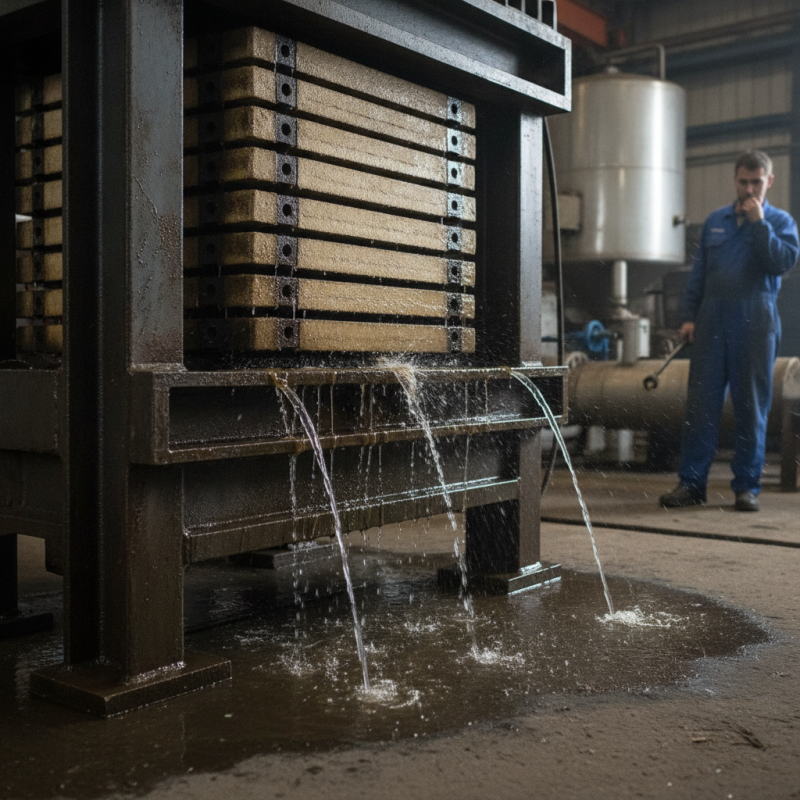
Filter presses are essential in many industries for separating solids from liquids. Understanding their functionality is crucial to diagnose and troubleshoot common issues, such as leaking water. A filter press operates by creating pressure to push liquid through filter media. This process relies on the integrity of seals and feed lines. When leaks occur, it often signals wear or damage in these components.
Common causes of leaking include worn seals, clogged filters, or malfunctioning pumps. Regular maintenance is vital in extending the life of a filter press. Check for signs of wear on the gaskets and seals. They may appear cracked or dry, leading to leaks. A clogged filter can cause excessive pressure, resulting in failure. Ensure filters are cleaned and replaced as needed.
In addition to physical inspections, consider the operational parameters. Running the filter press outside recommended pressure levels can stress components. This may lead to malfunctions and increased leaks. Reflecting on these aspects can enhance your understanding and application of effective troubleshooting tips. Keeping an eye on performance metrics and maintenance schedules will foster a more reliable filtering process.
| Issue | Possible Cause | Solution | Preventive Measures |
|---|---|---|---|
| Leaking between plates | Worn-out gaskets | Replace gaskets | Regularly inspect and replace gaskets |
| Leakage from the hydraulic unit | Hydraulic seal failure | Repair or replace seals | Routine maintenance checks |
| Water seeping from feed inlet | Improperly tightened fittings | Tighten all fittings | Monthly inspections |
| Dampness around the filtration area | Clogged filter cloth | Clean or replace filter cloth | Implement proper cleaning protocols |
| Pressure drops during operation | Blocked drainage | Clear blockages | Regularly check and clean drains |
: Look for water pooling around the filter press; it usually indicates seal failure or blockage.
If the cake is wet or fails to form, it may signal a water leak affecting filtration.
Unusual vibrations can point to misalignment or mechanical issues. They deserve careful attention.
Start with the feed pump; a malfunction here can lead to excessive pressure and leaks.
Examine them for cracks or degradation. If worn, they need immediate replacement.
Check all fittings for security and debris to prevent leaks that could escalate into major issues.
Neglecting minor issues can lead to significant leaks. Documentation of repairs helps identify repeating problems.
High temperatures or humidity may impact performance and could be mistaken for a component failure.
Yes, sometimes the issue isn't just a faulty component but also external conditions. Reflect on this possibility.
It can highlight trends over time, signaling when leaks are likely to occur, enabling proactive measures.
In the article titled "Why is My Filter Press Leaking Water: Troubleshooting Tips," the focus is on understanding the functionality of filter presses and identifying common issues that may arise during operations. The piece outlines how to recognize the signs of water leaks, which can include unusual moisture levels around the machine or unexpected drops in filtration efficiency.
It delves into the common causes of water leakage, such as worn seals or improper assembly, and provides a comprehensive step-by-step troubleshooting guide to address these issues effectively. Additionally, the article emphasizes the importance of preventive measures to avoid future leaks, ensuring that users can maintain optimal performance in their filter press operations. By addressing the question of why is my filter press leaking water, the guide equips readers with the knowledge needed to diagnose and fix problems proactively.

 Jovios Equipment