When it comes to maintaining filtration systems, one crucial question arises: how often should you replace filter press cloths? This query is significant for industries relying on these tools for efficient operations. Regular inspection and timely replacement can enhance performance and prolong equipment lifespan.
Replacing filter press cloths is not solely about following a schedule. It also involves understanding the specific conditions of operation. Factors such as material type, usage frequency, and the nature of the filtration process can influence cloth durability. Many users fail to monitor these aspects, leading to potential inefficiencies and increased costs.
For instance, a cloth used in a highly abrasive environment may wear out faster than one used for less demanding applications. Paying attention to signs of wear can help in making informed decisions. Knowing when to replace cloths can prevent costly downtimes and maintain productivity. Balancing replacement schedules with operational needs remains an ongoing challenge for many facilities.
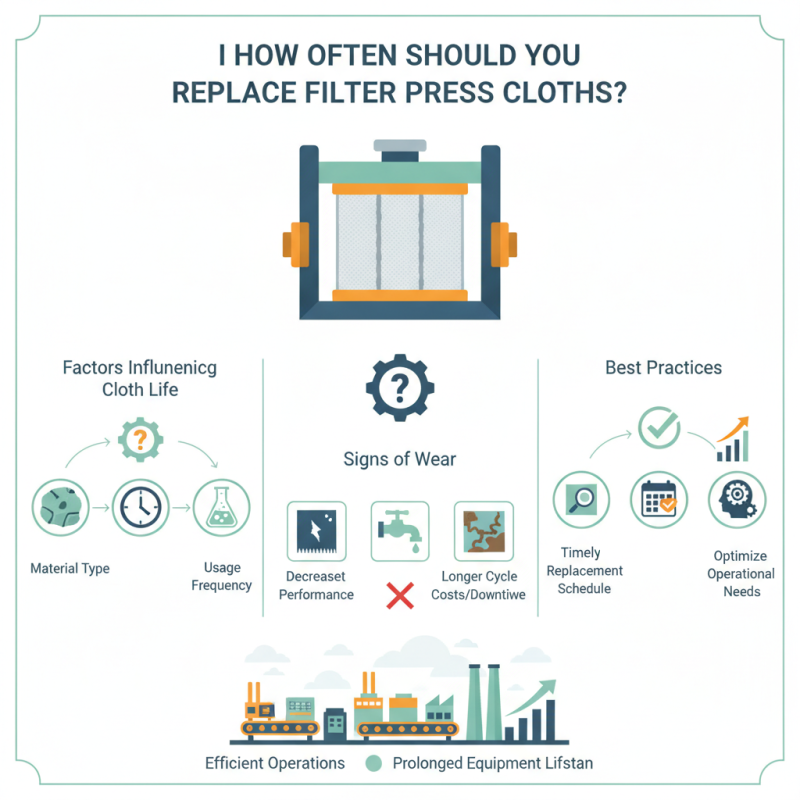
Filter press cloths play a crucial role in filtration systems across various industries. These cloths help separate solids from liquids, ensuring efficient and effective filtration. According to recent industry reports, filter press systems can achieve over 95% separation efficiency. This high performance is largely attributed to the quality of the filter cloths used. However, the cloths themselves require regular inspection and replacement to maintain optimal function.
A study from a leading filtration research organization indicates that filter cloths should be replaced every 6 to 12 months, depending on usage and specific operating conditions. In high-load applications, signs of wear may emerge sooner. Issues such as reduced flow rates or increased turbidity in the filtrate often signal that the cloths need attention. Neglecting to replace worn cloths can lead to costly downtime or compromised product quality.
Furthermore, it's essential to understand the materials used in cloth construction. Synthetic fabrics offer different levels of durability and filtration precision. A thorough comprehension of these properties can prevent frequent replacements and ensure operational reliability. Some operators may underestimate the impact of using subpar cloths, leading to ineffective filtration and increased operational costs. Overall, staying proactive about cloth replacement can enhance the longevity of the equipment and improve overall efficiency in filtration processes.
When considering the lifespan of filter press cloths, several factors come into play. Material quality significantly impacts durability. For instance, polyester cloths typically last 500 to 1,500 cycles, while polypropylene can endure fewer cycles due to its lower resistance to heat and chemicals. The type of slurry being processed also affects wear. High abrasive materials can shorten a cloth's lifespan drastically.
Regular maintenance is crucial to extend the life of these cloths. Cleaning methods, such as using high-pressure washing, can remove built-up residues that contribute to fabric degradation. A recent report indicates that improper cleaning can reduce lifespan by up to 30%. Monitoring the condition of filter plates and ensuring correct fittings can further minimize unnecessary wear.
Tips: Inspect cloths for signs of damage. Early detection can save costs. Implement a cleaning schedule. Regular maintenance is key. Consider the operational environment. Extreme temperatures can degrade cloth material swiftly. Aim for a proactive approach to extend the efficiency and durability of filter press cloths.
When it comes to filter press cloths, knowing when to replace them is crucial. Signs that it’s time for a change include visible wear and tear. Check for holes, tears, or excessive fraying. If you notice discoloration or stiff spots, it’s a warning sign. Clogged cloths may also indicate that they need replacement. Reduced filtration efficiency can lead to longer processing times and increased operational costs.
Another key indicator is the frequency of cleaning. If you find yourself cleaning cloths more often without achieving optimal results, they might have reached the end of their lifespan. Additionally, monitor the clarity of the filtrate. Poor clarity suggests that the cloths are no longer effective, prompting the need for replacement.
Tips: Regular maintenance checks help in timely identification of issues. Keeping a log of when cloths were last changed aids in planning future replacements. When in doubt, consulting a filtration expert can provide valuable insights into the condition of your filter press cloths.
This chart illustrates the percentage of users who replace their filter press cloths within varying time frames. Regular replacement is crucial to maintain efficiency and effectiveness in filtration processes.
When it comes to filter press cloths, understanding the recommended replacement frequency is crucial. Regular monitoring and timely replacements can prevent inefficiencies in your filtration process. Industry experts suggest that cloths should typically be replaced every 1 to 3 years, depending on usage. Factors like the type of material being filtered, the frequency of operation, and the nature of the slurry can all influence this timeline.
In some cases, you might notice signs that indicate a need for replacement sooner than expected. For instance, if cloths are showing excessive wear or if there is an increase in filter cake contamination, it’s time to take action. Additionally, frequent machine downtime for maintenance may hint at cloth degradation. Always evaluate the condition of your filter press cloths against these indicators. Being proactive about replacements can significantly enhance your operation's efficiency.
Maintaining filter press cloths is essential for optimal performance. Regular care can significantly extend their lifespan. Proper cleaning and handling should be prioritized to avoid premature wear. Always inspect cloths for signs of damage or contamination.
Tips: Regularly wash the cloths after use. This prevents material build-up that can lead to clogging. Use a gentle cleaning solution when necessary to avoid degradation.
Storing filter press cloths correctly is also crucial. Keep them in a dry, cool area. Avoid direct sunlight, as UV rays can weaken the fabric. Always handle them with clean, dry hands to prevent introducing dirt.
Tips: Rotate cloths in use. This helps distribute wear evenly across all cloths. Consider a schedule for replacing the oldest ones based on visible wear and tear. Regular checks can help identify issues early.
| Operation Type | Typical Replacement Interval (Months) | Signs for Replacement | Maintenance Tips |
|---|---|---|---|
| Chemical Processing | 6-12 | Cloth degradation, decreased flow rate | Regular cleaning and inspection |
| Mining & Metallurgy | 12-24 | Tears, excessive cake build-up | Use proper filter aid and maintain pressure |
| Food & Beverage | 6-18 | Stains, odors, reduced filtration efficiency | Thoroughly clean after use, avoid cross contamination |
| Wastewater Treatment | 12-36 | Visible degradation, reduced throughput | Monitor cake release behavior, optimize cleaning methods |
: Filter press cloths help separate solids from liquids to ensure effective filtration.
They should typically be replaced every 6 to 12 months, depending on usage.
Look for holes, tears, discoloration, and reduced filtration efficiency.
If you clean them often but results don’t improve, they may need replacing.
Using lower-quality cloths can lead to ineffective filtration and higher costs.
It allows for timely identification of issues and helps plan future replacements.
Poor clarity suggests that cloths are less effective and may require replacement.
Yes, different materials and slurry nature can influence how often replacements are needed.
Keeping a log aids in monitoring their condition and planning for timely changes.
Yes, consulting a filtration expert can provide helpful insights on cloth health.
The article "How Often Should You Replace Filter Press Cloths?" offers valuable insights into the crucial role filter press cloths play in filtration systems. Understanding their purpose helps to appreciate why maintaining them is essential for optimal performance. Several factors influence the lifespan of these cloths, including the type of material being filtered, operating conditions, and the frequency of use, which all impact how long they can last before requiring replacement.
To determine when it's time to replace filter press cloths, users should look for specific signs of wear, such as discoloration, reduced filtration efficiency, or visible damage. Recommended replacement frequency can vary, but regular assessments can ensure timely replacement and prevent system inefficiencies. Additionally, adopting best practices for maintaining filter press cloths, such as proper cleaning techniques and storage, can significantly extend their life, addressing the question of how often should you replace filter press cloths.

Jovios Equipment