I can write the introduction, but no source articles were included. Please provide a verified expert’s name and quotation, or the article containing them; I shouldn’t invent an attribution.
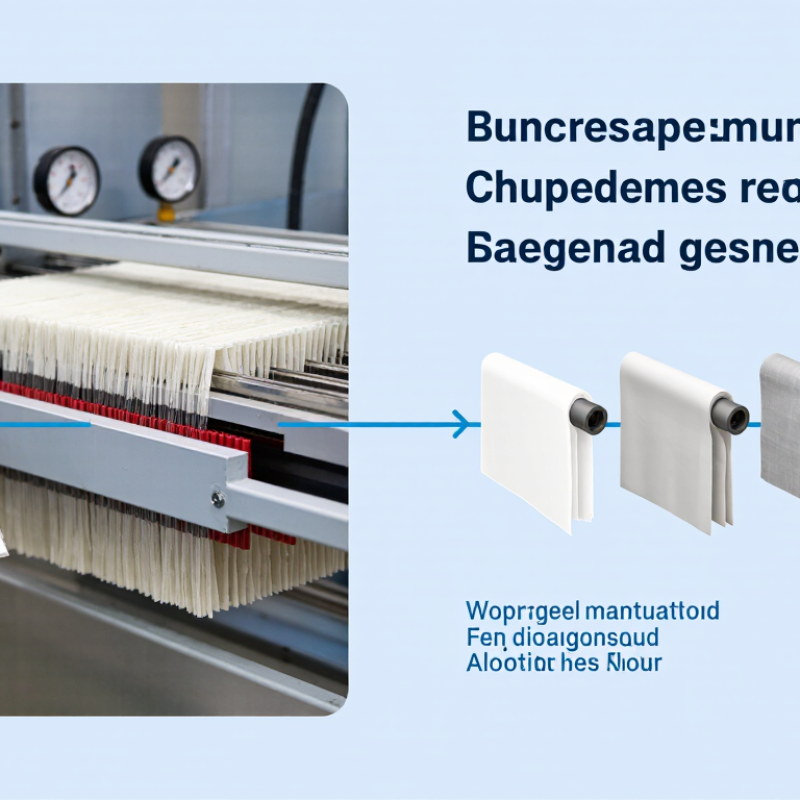
How Often Should You Replace Filter Press Cloths in 2026?
What Filter Press Cloths Do and How Their Service Life Is Measured
Filter press cloths hold back suspended solids while liquid passes through their weave. In a working press, the cloth also shapes the cake and affects how cleanly it releases. A cloth’s service life is not a fixed number of months. It depends on slurry chemistry, particle size, pressure, washing, and cycle frequency. Small clues matter: cloudy filtrate, slower flow, blinding, damaged seams, or cake that clings to the cloth. A clean cloth can still be worn.
Measure performance over time, not by appearance alone. Record cycles, filtration time, filtrate clarity, cake moisture, and wash frequency. Compare results with the same feed and operating settings; otherwise, a process change can look like cloth failure. ASTM D737 specifies a method for measuring air permeability, while ASTM D3786 measures bursting strength. These tests can help assess cloth condition, but neither sets a universal replacement threshold. The U.S. EPA’s 2000 Belt Filter Press fact sheet reports cake solids of roughly 12–35% for that equipment. It is not a filter-press benchmark, but it shows how strongly dewatering results can vary with feed and operation. There is room for judgment here: replace cloth when repeated performance loss persists after cleaning and process checks, not just because a calendar says so.
Filter press cloth life has no dependable calendar-based average. The European Commission’s 2018 Waste Treatment BREF recognizes pressure filtration as a dewatering method, but does not set a universal cloth replacement interval. That gap matters: abrasive mineral slurries, sticky biological solids, and fine particles wear or blind fabric differently. Particle size, slurry chemistry, operating pressure, wash frequency, and cloth weave all influence performance. Small changes add up.
Track cycle time, cake moisture, filtrate clarity, and cloth condition against each press’s own baseline. ISO 11057:2011 evaluates cleanable filter media through measures including pressure drop and residual pressure drop; ASTM D737 measures fabric air permeability. These tests offer useful comparison methods, not a guaranteed service-life figure. As a practical site-specific alert, investigate a sustained 15% rise in cycle time or a visible increase in cloudy filtrate before ordering cloth. That threshold is a monitoring choice, not an industry standard. Inspect seams and drainage paths, too. A cloth may look intact yet be blinded by fine solids, while a rough cake edge can reveal localized wear. My imperfect rule: trust trends more than dates. Keep replacement records by slurry and duty; otherwise, one unusually abrasive batch can distort the apparent average.
There is no universal replacement interval: cloth life depends on the slurry, operating conditions, cloth construction, and cleaning practices. The intervals below are broad planning estimates, not guaranteed service lives. Use condition checks and process performance to make the final decision.
| Operating condition or factor | Indicative planning interval | How it affects cloth life | What to monitor | Practical response |
|---|---|---|---|---|
| Mild service: fine, relatively non-abrasive solids and compatible slurry chemistry | About 12–24 months as an initial planning range | Lower abrasion and limited chemical attack can reduce wear, provided the cloth releases cake and remains permeable. | Filtrate clarity, cycle time, visible wear, and cake release. | Inspect routinely and replace when performance or cloth integrity declines, rather than replacing solely by calendar age. |
| Typical mixed industrial service | About 6–12 months as an initial planning range | Routine cycling, moderate solids loading, and periodic cleaning create gradual mechanical and permeability changes. | Changes in filtration time, moisture in the cake, blinding, and leakage at the plate edges. | Record cycle performance and compare it with a clean-cloth baseline. |
| Harsh service: coarse or sharp particles, high solids loading, or frequent cycles | About 1–6 months as an initial planning range | Abrasive particles, repeated flexing, and higher mechanical stress can accelerate wear, seam damage, and local failure. | Holes, thinning, frayed seams, edge damage, and solids appearing in the filtrate. | Inspect more frequently and keep compatible replacement cloths available for planned changeouts. |
| Abrasive or angular solids | May shorten the interval substantially; assess during operation | Particles can abrade the cloth surface and damage seams, especially where slurry enters or cake discharges. | Localized thinning, roughened surfaces, and repeat failures in the same areas. | Review cloth construction and feed distribution with the equipment or process specialist. |
| Chemical incompatibility, elevated temperature, or unusual pH | Replace when degradation appears; interval may be much shorter than expected | Unsuitable conditions can weaken fibers, seams, or finishes and reduce strength or filtration performance. | Brittleness, swelling, discoloration, loss of tensile strength, or premature tearing. | Confirm fiber and finish compatibility against the actual slurry chemistry and operating temperature. |
| Cloth blinding or poor cake release | Clean and reassess first; replace if permeability or release does not recover | Fine particles, oils, or precipitates can block pores, increasing resistance even when the cloth is not physically worn out. | Longer cycles, reduced filtrate flow, uneven cake formation, or cake sticking after discharge. | Use a cleaning method compatible with the cloth material and process; avoid aggressive cleaning that damages fibers. |
| High feed pressure, over-compression, or poor plate alignment | Inspect after abnormal events; replace damaged cloth promptly | Excessive or uneven mechanical loads can cause stretching, creasing, leaks, and damage around ports or seams. | Pressure-related leaks, permanent folds, shifted cloth, and edge or port damage. | Check operating settings, plate condition, and cloth fit before installing a replacement. |
| Infrequent or unsuitable cleaning | Can bring forward replacement; track performance after each cleaning | Residual solids may harden or build up, while overly aggressive chemicals or pressure washing can harm the cloth. | Persistent blinding, reduced flow after cleaning, and surface or seam damage. | Follow a validated cleaning procedure and document the method, frequency, and results. |
Replacement is usually warranted when cloth is torn, leaking solids, visibly weakened, or no longer meets required filtration performance after appropriate cleaning. Check cloth condition at each changeout and investigate sudden changes in filtrate quality, cycle time, or cake release. The planning ranges are indicative only; actual service life can fall outside them.
Inspect filter press cloths under bright light after washing, while the fabric is still damp. Look for pinholes, frayed seams, stretched edges, and shiny patches where fibers have flattened. These small defects matter. A pinhole can send solids into the filtrate, while a worn sealing edge may leave a visible leak trail on the plate.
Blinding often looks less dramatic: the cloth surface stays coated, pores appear closed, and cake release becomes uneven. Track cycle time, filtrate clarity, cake moisture, and wash frequency against the cloth’s own baseline; a single slow cycle proves little. ASTM D737-18(2023) provides a controlled method for measuring textile air permeability; a 125 Pa pressure differential is a common test setting. Compare new and used cloth samples under the same conditions, rather than treating one reading as a universal replacement threshold. If permeability falls while pressure and feed remain steady, cleaning may help. It may not. I have seen operators blame cloths before checking blocked drainage channels, so inspect the plate too. Keep cycle counts and dated photographs. Those records make wear easier to separate from process changes.
A replacement schedule should follow cloth condition, not a calendar alone. In abrasive mineral slurries, inspect after every shift for pinholes, frayed seams, blinded areas, and uneven cake release. For cleaner, low-solids applications, weekly checks may be enough. Record cycle time, filtrate clarity, wash frequency, and cloth age together; a rising cycle time can signal blinding before a tear appears.
Use a baseline for each cloth type and process. ASTM D737-18(2023), an industry test method, measures fabric air permeability at a controlled pressure differential of 125 Pa. Comparing clean and used samples under the same test conditions can reveal pore blockage. It does not set a universal discard limit, though. Set a site threshold using trial data, and replace cloth when permeability loss coincides with slower filtration, cloudy filtrate, or poor cake discharge.
Operating conditions change the interval. High abrasion, sharp particles, frequent high-pressure washing, and temperature or chemical exposure can shorten cloth life. Check high-wear zones more often, especially near feed openings and plate edges. In stable service, inspect monthly and review replacement trends quarterly; in harsh service, log findings every shift. That schedule is imperfect: one aggressive wash can undo months of gradual wear. Keep a spare set ready, and revise the interval after process changes.
Filter press cloths do not have one reliable replacement date. In 2026, use operating hours and performance trends, not the calendar alone. Abrasive feed, cleaning methods, and pressure cycles all affect cloth life. Watch for slower drainage, wetter cake, cloudy filtrate, or recurring leaks around plate edges. Record these signs after each run. A gradual decline can be easy to miss.
Before replacement, isolate the press, release pressure, and drain it fully. Mark each cloth’s orientation, then remove it without scraping the plate surface. Check plate grooves and feed openings for packed solids; a new cloth will not fix a blocked channel. Fit the replacement evenly, align openings and seams, and avoid pulling the fabric tight. Do not guess. If the cloth bunches or shifts, stop and refit it. Uneven tension can create bypass paths.
Run a short rinse cycle, then inspect the filtrate for visible solids and check plate edges for leaks. During the next production cycle, compare cycle time, cake dryness, and filtrate clarity with recent records under similar feed conditions. Small leaks matter. If performance remains poor, review feed preparation, plate condition, and operating pressure before blaming the cloth again. One imperfect comparison is not proof; repeat the check under consistent conditions.
Use a condition-based replacement routine—not a fixed calendar interval.
Follow your operating procedure for inspection frequency. Check cloth condition and filtration results during routine operation; compare cycle time, filtrate clarity, and cake release with your clean-cloth baseline. Clean and reassess the cloth, then replace it if it is damaged or performance remains unsatisfactory. There is no universal service life: operating conditions and cloth specifications affect replacement timing.
No universal calendar interval applies. Slurry, pressure, washing, and fabric weave all affect cloth life.
Watch for longer cycles, cloudy filtrate, poor cake release, pinholes, and frayed seams. Small changes matter.
A sustained 15% increase can serve as a site alert. It is a monitoring choice, not an industry standard.
Inspect abrasive mineral service after each shift. Weekly checks may suit cleaner, low-solids applications.
Check feed openings, plate edges, seams, and drainage paths. These areas can show localized wear or blockage.
Yes. Fine solids can blind the fabric without visible damage. Cloudy filtrate may reveal the problem.
Test both under the same conditions and compare air permeability. This can reveal pore blockage, but sets no discard limit.
Set thresholds from process trials and track cycle time, filtrate clarity, and cake release together. This rule is imperfect.
Abrasive particles, aggressive washing, heat, and chemical exposure can accelerate wear. One rough wash can change the trend.
Record cloth age and process conditions by slurry and duty. Otherwise, one unusually abrasive batch may distort the average.
Filter press cloths retain solid particles while allowing liquid to pass through, and their service life is best judged by operating hours, filtration cycles, throughput, and the quality of the filtrate—not by a fixed calendar interval alone. How often should you replace filter press cloths depends on factors such as slurry chemistry, particle size, pressure, temperature, cleaning practices, and how frequently the press operates. These conditions can cause gradual wear, blocked pores, or physical damage at different rates.
Regular inspections help identify blinding, thinning, frayed edges, tears, leaks, and persistent declines in filtration performance. Use inspection findings and operating records to set a replacement schedule suited to each process, then review it as conditions change. When installing new cloths, ensure they are correctly aligned and fitted, and check for leaks and consistent filtration during initial cycles. Comparing performance before and after replacement can help confirm that the cloths are functioning as expected and inform future maintenance planning.

Jovios Equipment