China Best Filter Press Cloth How to Choose the Right One?

Time:2026-10-13 Author:Charlotte
0%

Choosing the best filter press cloth from China requires more than comparing prices or product photographs. The correct cloth must match your slurry, filter press, operating pressure, and cleaning routine. This guide explains how to choose the right filter press cloth through practical selection criteria and careful supplier evaluation.

Experienced operators usually begin with the slurry. Fine mineral particles may need a tighter weave, while fibrous or fast-draining materials often require higher permeability. Polypropylene suits many chemical and industrial applications because it offers useful chemical resistance. Polyester can provide stronger dimensional stability in selected conditions. The choice still depends on temperature, pH, particle size, and cake moisture requirements. Small details matter. A slightly wrong cloth can reduce filtration speed, cause blinding, or leave a wet cake behind.

Cloth shape and workmanship also deserve close attention. Check the plate size, feeding holes, sealing edges, stitching, and discharge design. A precise fit helps prevent leakage around the plate frame. Ask Chinese manufacturers for material specifications, production samples, test data, and cleaning recommendations. Reliable suppliers should discuss filtration results, not only fabric weight or mesh count. Performance varies. A cloth that works well in wastewater may perform poorly with food-grade slurry or abrasive minerals. I would not trust a universal recommendation without testing. Trial filtration under real operating conditions remains the most reliable step. Compare cycle time, filtrate clarity, cake release, cloth wear, and cleaning effort before placing a large order. The best decision balances technical evidence, service support, and long-term operating cost.
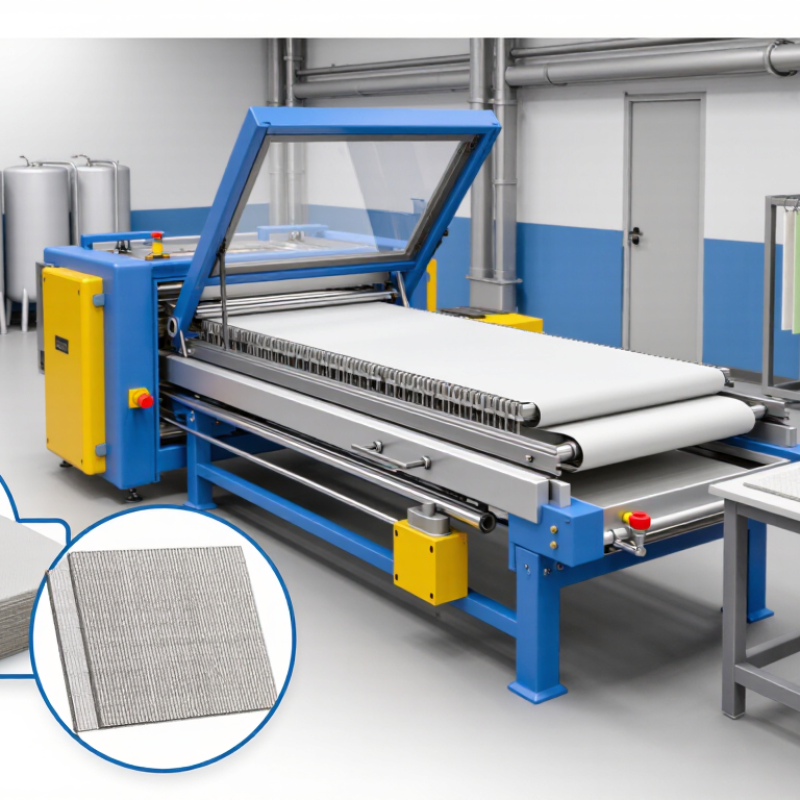
China Best Filter Press Cloth How to Choose the Right One?

What Is a Filter Press Cloth and How Does It Work?

A filter press cloth is a porous textile fitted between recessed or plate-and-frame filter plates. It separates solids from liquid during pressure filtration. As the slurry enters the press, liquid passes through the cloth openings, while suspended particles remain on its surface. The retained solids gradually form a filter cake.

Small openings matter. If the weave is too open, fine particles may pass through, causing cloudy filtrate. If it is too tight, flow slows and cleaning becomes difficult. Common materials include polypropylene, polyester, and nylon, each offering different resistance to chemicals, heat, and abrasion. The right choice depends on the slurry, operating temperature, pressure, and required filtrate clarity.

Technicians usually inspect the cloth after each cycle. They check blocked pores, stretched seams, and damaged edges. A clean, properly fitted cloth can improve drainage and extend service life. It must sit flat against the plate. Even a small fold can create leakage.

Some selection decisions are not perfect. A cloth that performs well in laboratory tests may clog faster in continuous production. This is why trial filtration remains valuable. Compare cake moisture, filtrate clarity, washing performance, and cleaning time under real conditions. Do not judge the cloth by fabric weight alone. Its weave pattern, finishing treatment, stitching quality, and compatibility with the slurry often matter more.

Which Filter Press Cloth Materials Suit Different Filtration Tasks?

China Best Filter Press Cloth: How to Choose the Right One?

Filter press cloth material should match the slurry, not just the machine size. Polypropylene is a practical choice for many mineral, chemical, and wastewater applications. It resists many acids and alkalis, releases cakes fairly well, and handles routine temperatures. Polyester offers strong dimensional stability and suits oil-containing slurries, solvents, and higher-temperature filtration. However, hot alkaline cleaning can weaken it over time. Nylon provides excellent abrasion resistance and can capture fine particles with a smooth surface. It is less suitable for strong acids.

Chemical conditions matter.

For highly corrosive media or demanding high-temperature service, PTFE may provide better resistance. Its higher cost and lower mechanical flexibility must be considered. Aramid fabrics can tolerate elevated temperatures and abrasion, but they require careful chemical compatibility checks. A cloth with a tighter weave may improve filtrate clarity, yet it can reduce flow and blind faster. This trade-off is often missed during selection.

In practice, test a small cloth sample with the actual slurry. Check filtrate clarity, cake moisture, washing results, and cloth cleaning after several cycles. A material that performs well on day one may foul quickly. The best choice can also depend on weave pattern, fabric weight, seam design, and washing pressure. Do not rely on a material name alone. Temperature, pH, particle shape, and operating pressure should be recorded before ordering.

How to Match Cloth Design with Filter Press Specifications?

China Best Filter Press Cloth: How to Choose the Right One?

Matching cloth design with filter press specifications requires more than selecting polypropylene by habit. The plate size, chamber depth, feed pressure, sludge type, and discharge method must work together. The 2024 United Nations World Water Development Report states that agriculture uses about 70% of global freshwater withdrawals. This pressure increases the need for dependable sludge and process-water recovery. A cloth with suitable permeability can improve filtrate clarity, but excessive permeability may allow fine particles to escape.

Check the filter press drawing before ordering. Confirm the cloth length, width, feed-hole position, washing ports, gasket profile, and fastening method. For high-pressure cycles, a reinforced seam and stable dimensional design matter. For acidic or alkaline materials, verify chemical resistance at the actual operating temperature. A denser weave may produce clearer filtrate, yet it can slow the cycle. Small details matter.

Field testing is still necessary. Use the real slurry, not clean water. Record cake moisture, filtration time, filtrate turbidity, and cloth cleaning frequency. The Water Environment Federation identifies solids concentration and dewatering performance as major operating variables in wastewater treatment. However, a perfect cloth rarely exists. Operators sometimes choose maximum clarity and overlook energy use. That choice needs reconsideration. Start with a sample set, compare results, and adjust the design after observing actual cake release.

China Best Filter Press Cloth How to Choose the Right One? - How to Match Cloth Design with Filter Press Specifications?

Selection Dimension Recommended Data or Range Matching Filter Press Specification Suitable Application Selection Notes
Filter Press Type Recessed-chamber, plate-and-frame, membrane, or belt filter press cloth The cloth design must match the plate profile, feed holes, corner ports, and sealing area Industrial solid-liquid separation A cloth made for a recessed plate should not be installed on a plate-and-frame design without dimensional verification.
Cloth Material Polypropylene (PP), polyester (PET), or polyamide/nylon (PA) Select material according to chemical exposure, temperature, abrasion, and hydrolysis risk PP: general chemical service; PET: higher temperature and dimensional stability; PA: flexible and abrasion-resistant service Polypropylene is commonly selected for acidic or alkaline slurries, while polyester requires careful evaluation in strongly alkaline or hydrolytic conditions.
Filament Type Monofilament, multifilament, or mixed construction Match the required cake release, filtrate clarity, strength, and cleanability Monofilament: easy cake release; multifilament: higher particle retention; mixed: balanced performance Monofilament surfaces usually collect less residual cake, whereas multifilament fabrics can provide finer filtration.
Weave Structure Plain, twill, satin, or special filter weave Use the weave to balance permeability, cake release, tensile strength, and blinding resistance Plain weave: stable and durable; twill: improved flexibility; satin: smooth surface and good cake discharge A smoother weave generally improves cake release, but the final choice must still meet the required particle retention.
Nominal Air Permeability Approximately 20–250 L/dm²/min, depending on fabric construction Lower permeability for fine particles; higher permeability for fast drainage and coarse solids Fine mineral slurries, wastewater sludge, food suspensions, and chemical precipitates Permeability should be evaluated together with filtrate clarity; a high value does not always mean higher overall throughput.
Filtration Rating Typical particle retention from approximately 5–100 μm, depending on fabric and cake formation Choose according to required filtrate clarity and the particle-size distribution of the feed Fine chemical solids, metal hydroxides, pigments, ceramics, and municipal sludge Actual retention depends on slurry concentration, pressure, filter cake thickness, and filter aid use; nominal mesh data alone is not sufficient.
Cloth Thickness Approximately 0.8–2.5 mm for common filter press fabrics Confirm that the cloth thickness does not interfere with plate closing or chamber volume Thin cloths for low-resistance filtration; thicker cloths for durability and higher mechanical loading An overly thick cloth can reduce effective chamber capacity and cause sealing or plate-alignment problems.
Operating Temperature Common service range: approximately 20–90°C; confirm the material limit before use Match the cloth polymer, gasket material, plate material, and washing temperature Ambient wastewater, hot process liquids, chemical precipitation, and food processing Continuous operating temperature and short-term cleaning temperature should be assessed separately.
Chemical Compatibility Check pH, oxidants, solvents, oils, salts, and cleaning chemicals Use PP, PET, or PA only after confirming compatibility with the complete chemical profile Acidic wastewater, alkaline slurries, electroplating residues, and chemical process streams Chemical compatibility depends on concentration, temperature, exposure time, and combined chemicals rather than pH alone.
Cloth Configuration Single cloth, two-piece cloth, or cloth with integrated feed-eye and corner openings Match plate dimensions, feed arrangement, washing ports, drain holes, and gasket geometry Side-feed, center-feed, top-feed, and underdrain filter press layouts Incorrect openings can cause leakage, blocked feed channels, uneven cake formation, or incomplete washing.
Plate Size and Chamber Depth Measure plate length, width, thickness, recessed depth, and hole positions The cloth must cover the filtration area while remaining clear of plate seals and moving components Manual, semi-automatic, and automatic filter presses Use actual plate measurements or the equipment drawing instead of relying only on nominal press size.
Operating Pressure Common filter press pressure ranges are approximately 5–16 bar, subject to equipment design Select fabric with sufficient tensile, bursting, and seam strength for the maximum pressure Standard pressure filtration and high-pressure dewatering The cloth pressure rating must not exceed the certified limit of the plates, pump, or press frame.
Cake Release Requirement Easy release, low residual adhesion, and minimal cloth deformation Prefer smooth monofilament or satin-type surfaces when cake discharge is difficult Hydrophobic mineral cakes, sludge, pigments, and sticky chemical solids Cake release can also be improved by correct plate alignment, air blow, cloth washing, and optimized cycle time.
Blinding Resistance Select a fabric with suitable surface smoothness, pore structure, and cleanability Use an open, cleanable weave for compressible or gelatinous solids; use finer fabric for small particles Biological sludge, starch, clay, pigment, and fine mineral suspensions A cloth that is too fine may blind quickly and reduce flow, even if initial filtrate clarity is excellent.
Cleaning Method Water spray, alkaline wash, acid wash, or mechanical cleaning Match fabric, stitching, and seam materials with the cleaning pressure and chemicals Continuous production and applications requiring repeated cloth reuse Cleaning pressure should be controlled to avoid damaging fibers, seams, grommets, or plate surfaces.
Seam and Edge Design Reinforced edges, sealed or hemmed seams, welded eyelets, and compatible gaskets Ensure the perimeter can withstand repeated closing, pressure cycles, and washing High-cycle automatic presses and abrasive slurries Seam dimensions must not obstruct the sealing line or reduce the usable filtration area.
Recommended Verification Before Ordering Provide plate drawing, cloth dimensions, feed-hole layout, slurry data, pressure, temperature, pH, and cleaning method Verify fit, filtration performance, chemical compatibility, and mechanical safety through documentation or a trial test New installations, replacement cloths, and process optimization The most reliable selection combines equipment measurements with a representative slurry test rather than choosing by fabric material alone.

What Factors Determine Filtration Efficiency and Service Life?

China Best Filter Press Cloth: How to Choose the Right One?

What Factors Determine Filtration Efficiency and Service Life?

Filter cloth performance begins with the material. Polypropylene suits many acidic or alkaline slurries, while polyester often handles higher temperatures. Confirm chemical compatibility with the actual liquid, not a general process name.

A tighter weave is not always better. Smaller pores can improve clarity, but they may slow filtration and blind quickly. Match the cloth opening to the particle size and expected filter cake. Permeability, air flow, and cake release also matter. We learned this the hard way. A cloth that produces clear filtrate may still waste hours during washing.

Operating pressure strongly affects service life. Excessive pressure can stretch fibers, damage seams, or force fine particles into the weave. Keep the plates aligned and check the sealing edges after every cycle. Small details matter. Wrinkles and poor fitting can create bypass leaks, even when the fabric looks new.

Temperature, washing chemicals, and drying methods deserve equal attention. Use the manufacturer’s tested limits, then verify them under real conditions. Record filtration time, filtrate clarity, pressure changes, and cloth appearance. Measure it. These records reveal gradual blinding before production becomes unstable.

Do not judge cloth quality from one successful batch. Slurry concentration changes, and so does cloth behavior. In practice, a balanced cloth often outlasts a highly specialized one. Still, pilot testing remains essential because laboratory samples rarely reproduce every pump pulse, washing cycle, or abrasive particle.

How to Evaluate Chinese Filter Press Cloth Suppliers and Quality?

China Best Filter Press Cloth: How to Choose the Right One?

Evaluating Chinese filter press cloth suppliers requires more than comparing prices. Start with the supplier’s production experience, material knowledge, and quality control records. Ask whether they understand your slurry, pressure, temperature, and chemical conditions. A reliable supplier should provide fabric composition, thickness, air permeability, weight, and dimensional tolerance. Request recent inspection records, not only a polished catalogue. A professional factory can explain why polypropylene, polyester, or nylon suits a specific filtration process.

Order samples before approving bulk production. Check the cloth’s stitching, sealing edges, eyelets, and filter plate fit. During testing, record filtration speed, cake moisture, cloth release, and cleaning performance. Small defects matter. Loose threads may shorten service life. Uneven dimensions can cause leakage. I have found that low prices sometimes hide inconsistent cutting or weak seams. However, expensive cloth is not automatically better. This is where careful comparison becomes necessary.

Tips: Visit the factory when possible, or request a live production inspection. Confirm raw material sources and batch traceability. Ask for a written quality standard and a replacement procedure. Test samples with your actual sludge, not clean water alone. Keep communication records, because vague promises create avoidable problems. Also, allow reasonable tolerance; real production is rarely perfect. A supplier willing to discuss failures is often more dependable than one claiming flawless results.

FAQS

What is a filter press cloth?

It is a porous textile placed between filter plates. It separates suspended solids from liquid under pressure.

How does a filter press cloth work?

Slurry enters the press. Liquid passes through the cloth openings, while particles remain on the surface.

Why does cloth opening size matter?

Open weaves may let fine particles pass, creating cloudy filtrate. Very tight weaves can slow drainage and clog faster.

Which material suits general filtration work?

Polypropylene suits many mineral, chemical, and wastewater slurries. It resists many acids and alkalis.

When is polyester a suitable choice?

Polyester provides strong dimensional stability. It can suit oil-containing slurries, solvents, and higher-temperature filtration.

When might nylon be useful?

Nylon offers strong abrasion resistance and captures fine particles effectively. Its smooth surface can support cleaner filtration.

What should be checked before ordering cloth?

Record temperature, pH, particle shape, operating pressure, and required filtrate clarity.

How should a cloth be inspected during operation?

Inspect it after each cycle. Look for blocked pores, stretched seams, damaged edges, and uneven fitting.

How can the correct cloth be tested?

Test a small sample with the actual slurry. Compare cake moisture, filtrate clarity, washing results, and cleaning time.

Is fabric weight enough for selection?

No. Weave pattern, finishing treatment, stitching quality, seam design, and slurry compatibility also matter.

Conclusion

Choosing the right filter press cloth is essential for achieving efficient solid-liquid separation, stable production, and longer operating life. A filter press cloth acts as the filtering medium, allowing liquid to pass through while retaining solid particles during the pressing cycle. To understand how to choose the right filter press cloth, users should consider the material being processed, particle size, temperature, chemical conditions, moisture requirements, and cleaning method. Common materials such as polypropylene, polyester, nylon, and specialized fabrics offer different levels of chemical resistance, strength, flexibility, and filtration precision.

The cloth design must also match the filter press plate size, chamber structure, sealing method, and operating pressure. Filtration efficiency and service life depend on fabric permeability, air permeability, surface finish, seam quality, dimensional accuracy, and resistance to clogging or abrasion. When evaluating suppliers in China, buyers should review production capabilities, material consistency, quality inspection procedures, customization support, sample performance, and after-sales communication. A reliable supplier should provide clear technical specifications and help select a suitable cloth for the intended application.

Charlotte

Charlotte

Charlotte is a seasoned marketing professional with a deep understanding of the company's portfolio and a passion for elevating its presence in the market. With a keen eye for detail and a commitment to excellence, she ensures that our professional blog is regularly updated with insightful articles......