How to Wash China Best Filter Press Cloths Efficiently?

Time:2026-10-27 Author:Aria
0%

Cleaning filter press cloths is not a minor maintenance task. It directly affects filtration speed, cake dryness, and cloth service life. Many operators search for how to wash filter press cloths efficiently, yet the correct method depends on fabric material, slurry composition, and filter press design.

China best filter press cloths are commonly made from polypropylene, polyester, or nylon. Each material reacts differently to heat, chemicals, and mechanical force. Begin by removing loose cake with a plastic scraper. Avoid sharp metal tools. They can cut the fibers and create hidden leakage points.

Rinse with clean water before applying any detergent. A low-pressure spray can remove trapped particles from the cloth surface. High pressure may damage seams or enlarge filtration pores. Small details matter. Check the feed holes, edges, and drainage areas carefully.

For oily deposits, use a compatible alkaline cleaner. For mineral scaling, a manufacturer-approved acidic solution may work better. Never mix cleaning chemicals. Always confirm concentration and temperature recommendations with the cloth supplier. Poor chemical control can weaken the fabric quickly.

A soft brush may help remove stubborn residue. Do not scrub aggressively. The cloth may appear clean while its internal structure remains blocked. After washing, inspect it against bright light. Uneven pores, frayed threads, and hardened areas need attention.

Allow the cloths to dry fully before storage or reuse. Fold them loosely in a clean, shaded location. Direct sunlight can age some synthetic fibers. This process is practical, but not perfect. Cleaning frequency should be adjusted after observing actual filtration performance, not guessed from a fixed schedule. Experiences from operators and technical guidance should support every adjustment.
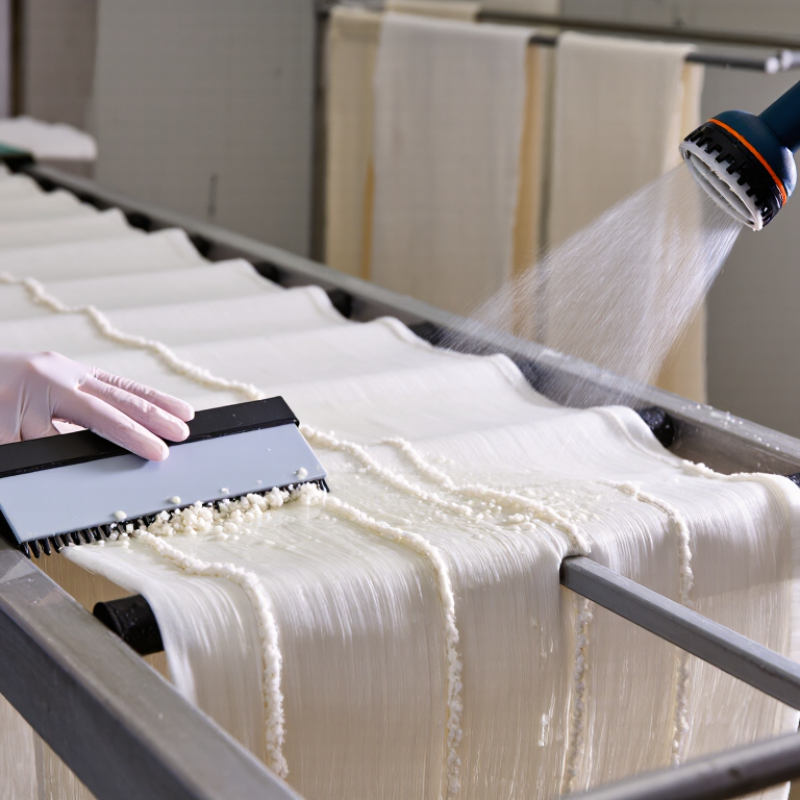
How to Wash China Best Filter Press Cloths Efficiently?

Identify the Fabric and Washing Requirements of China Filter Press Cloths

Before washing China filter press cloths, identify their fabric and treatment history. Polypropylene cloths resist many acids and alkalis. Polyester handles heat better, but strong alkalis can weaken it. Nylon absorbs more water and needs gentler alkaline cleaning. PTFE blends tolerate demanding chemicals, yet they still require supplier limits. Check the label, purchase record, and technical sheet. Do not guess from color or stiffness alone. A white cloth may contain different fibers.

Remove cake while the cloth is still damp. Use a soft scraper, not a sharp blade. Rinse with clean water at moderate pressure. Direct the spray across the surface, not into the weave. This protects the seam and prevents embedded solids.

For oily deposits, use a neutral or fabric-approved detergent. For mineral scale, use a compatible mild acid only when the fabric sheet allows it. Measure concentration and temperature. Small errors matter. Never mix cleaning agents.

Wash a small corner first. Record contact time, water temperature, and visible changes. In practice, a short soak often works better than aggressive spraying. Keep the cloth flat during cleaning. Avoid twisting, folding tightly, or drying it against hot metal. Air-dry it in shade, then inspect the pores, edges, and stitching. A cloth can look clean while its permeability has already changed. I have seen operators repeat the same wash cycle without checking filtration rate. That habit wastes service life. If the fabric becomes brittle, swollen, glazed, or uneven, stop using the old procedure and reassess the washing requirement.

Prepare the Filter Press Cloths Before Washing

How to Wash China Best Filter Press Cloths Efficiently?

Prepare the Filter Press Cloths Before Washing

Preparation controls cleaning quality more than water pressure alone. According to the U.S. Environmental Protection Agency’s 2023 Water Reuse Action Plan, wastewater systems must manage contaminants by source, not only after treatment. Apply that principle to filter press cloths. Identify the processed material, cake type, pH, and likely residues before removing the cloths. Record the last cycle’s pressure and moisture level. These details help prevent an unsuitable washing method.

Let the cloths cool first. Remove loose cake with a soft plastic scraper, never a metal blade. Check the seams, feed holes, edges, and fasteners for cuts or distortion. Separate heavily fouled cloths from lightly loaded ones. The Global Water Intelligence 2024 market report notes that industrial water users are increasing reuse and recovery targets, making reliable filtration maintenance more important. Still, cleaning too aggressively can shorten cloth life. That is an easy mistake.

Rinse from the clean side toward the dirty side. Use warm water only when the cloth material allows it. ASTM D737 testing shows that air permeability is a key indicator for textile filter performance, so blocked pores should be monitored after washing. Measure the cloth’s permeability, appearance, and dimensions before returning it to service. Some operators skip this record. They later blame the press for problems caused by damaged or chemically weakened cloths.

Remove Residue with the Appropriate Cleaning Method

Filter press cloths work efficiently only when trapped residue is removed without damaging the fabric. The correct method depends on the material left inside the cloth. Mineral deposits may need an approved acidic cleaner, while oil-based residue often requires a compatible alkaline detergent. Never choose chemicals by habit. Check the cloth manufacturer’s material guidance and the residue’s pH first.

Begin by scraping off the filter cake with a soft plastic tool. Avoid sharp blades, which can cut the sealing edges. Rinse both sides with clean water, directing the spray from the filtrate side outward. Use low pressure. Excessive pressure can stretch the weave and force solids deeper into the pores. For stubborn buildup, soak the cloth in a diluted cleaning solution at a controlled temperature. A soft brush can loosen residue around the feed holes and stitching.

Rinse until the water runs clear and its pH returns near neutral. Let it drain. Then dry the cloth fully in a shaded, ventilated area. Direct sunlight and high heat may weaken synthetic fibers. Inspect every corner for blocked openings, frayed seams, or hard deposits before reuse. In practice, I have found that rushing the drying stage causes more problems than the washing itself. One missed pocket of damp residue can produce odor and reduce filtration during the next cycle. Record the cleaning method, concentration, and washing date for consistent maintenance.

How to Wash China Best Filter Press Cloths Efficiently? - Remove Residue with the Appropriate Cleaning Method

Residue Type Recommended Cleaning Method Typical Cleaning Conditions Suggested Equipment Important Precautions Expected Cleaning Result
Water-soluble salts and loose process solids Rinse with clean water immediately after filtration. Use a low-pressure pre-rinse to remove loose cake before washing. Ambient to warm water, approximately 20–40°C; continue until the rinse water becomes visibly clear. Clean-water spray bar, hose with a suitable fan nozzle, or an integrated cloth-washing system. Avoid excessive pressure that may stretch, cut, or distort the cloth fabric. Removes loose particles and reduces the risk of residue drying inside the weave.
Organic matter, oils, fats, and biological residues Apply a compatible alkaline detergent after removing loose solids. Allow contact time, then rinse thoroughly with clean water. Usually 40–60°C with a mildly to moderately alkaline cleaner; follow the detergent supplier’s concentration guidance. Recirculating wash tank, spray system, or soft-bristle brush for localized deposits. Confirm that the cloth polymer and seam materials tolerate alkaline chemicals and elevated temperature. Breaks down greasy or organic films that water alone may not remove.
Mineral scale, calcium carbonate, and hard-water deposits Use a compatible acidic descaling solution after mechanical rinsing. Rinse with clean water until the effluent reaches a near-neutral pH. Ambient temperature is commonly sufficient; mild organic acids are often preferred for controlled descaling. Immersion tank, controlled circulation loop, or low-pressure spray system. Never mix acids with chlorine-containing cleaners. Check chemical compatibility before use. Dissolves mineral deposits and helps reopen blocked filtration passages.
Iron and other metal oxide deposits Pre-rinse the cloth, then use a suitable acidic cleaner or chelating treatment designed for metal deposits. Use the lowest effective chemical concentration and temperature specified by the chemical supplier. Immersion tank or recirculating cleaning system with pH monitoring. Test a small area first because strong acids can damage certain synthetic fibers, coatings, or hardware. Reduces rust-colored staining and loosens metal-containing scale.
Fine clay, pigment, carbon black, and colloidal particles Use a staged rinse: first from the filtrate side where appropriate, followed by a controlled clean-water wash. A compatible dispersant may be used if necessary. Ambient to warm water; avoid allowing fine particles to dry on the cloth. Cloth-washing spray bar, oscillating nozzle, or low-pressure cleaning lance. High-pressure jets can force particles deeper into the cloth and may damage the weave. Improves permeability by removing fine particles trapped between fibers.
Adhesive, resinous, or polymer-based residues Remove the bulk of the deposit mechanically, then apply a chemical cleaner specifically compatible with the residue and cloth material. Use controlled temperature and short contact periods; avoid heating an unknown residue. Soft scraper, compatible solvent-free cleaner, and immersion or circulation equipment. Do not use solvents unless the cloth manufacturer confirms compatibility; some solvents weaken synthetic fibers or seals. Softens or removes sticky deposits without unnecessary abrasion when the cleaner is properly selected.
Microbial slime and biofilm Pre-rinse, clean with a compatible alkaline detergent, and use an approved disinfecting step when required by the process. Follow the disinfectant label for concentration and contact time; rinse completely before returning the cloth to service. Spray washer, immersion tank, or recirculation system with appropriate ventilation. Do not combine oxidizing disinfectants with acids or ammonia-based cleaners. Reduces organic film and microbial contamination while helping prevent odor and flow restriction.
Mixed or unknown residue Start with a water rinse, identify the dominant contaminant, and perform a small-scale compatibility test before full cleaning. Begin at ambient temperature and use the mildest effective cleaning method. Sample container, pH strips or meter, low-pressure washer, and controlled wash tank. Avoid random chemical mixing. Record the residue, chemical used, concentration, temperature, and cleaning time. Provides a safer cleaning route and reduces the risk of permanent cloth damage.
Routine maintenance after each filtration cycle Remove the filter cake promptly, inspect the cloth, rinse both accessible surfaces, and allow the cloth to drain or dry according to process requirements. Use clean water at a temperature suitable for the cloth material and process residue. Integrated cloth washer, clean-water hose, inspection light, and soft brush. Do not scrape with sharp tools or fold wet cloths tightly for long-term storage. Maintains permeability, reduces odor, and extends the service life of the filter cloth.

Safety note: Cleaning conditions must be verified against the filter cloth fiber, sewing thread, membrane, gasket, and process chemistry. Always follow the relevant safety data sheet and conduct a small compatibility test before full-scale washing.

Wash, Rinse, and Inspect the Filter Press Cloths Thoroughly

How to Wash China Best Filter Press Cloths Efficiently?

Wash, Rinse, and Inspect the Filter Press Cloths Thoroughly

Effective cleaning starts when the filtration cycle ends. Remove the cloths carefully, without pulling the edges or twisting the seams. Scrape off thick cake deposits with a soft plastic tool. Avoid sharp metal blades. They can create tiny cuts that later become visible leaks. Rinse the cloths with clean water from the filtrate side outward. This direction helps push trapped particles away from the pores. Keep the water pressure moderate. Excessive pressure may stretch the fabric.

For stubborn mineral or oily residue, use a cleaning solution recommended for the cloth material. Check the polymer type before selecting any chemical. Polypropylene and polyester may react differently. Soak the cloths for the specified time, then rinse them thoroughly. Do not leave chemical traces behind. They can affect the next batch and weaken the fibers. I have found that rushing this stage often causes repeated blinding. The cloth looks clean, but its drainage remains poor.

Inspect every cloth under bright light. Look for pinholes, thinning areas, blocked pores, loose stitching, and distorted sealing surfaces. Gently flex the fabric. Cracking or unusual stiffness deserves attention. Measure damaged areas and record their locations. This simple record supports consistent maintenance decisions. Sometimes, replacing one weak cloth is safer than extending its service life. Still, inspection results are not always perfect. Dirt can hide small defects, so recheck after drying. Air-dry the cloths fully before storage, away from direct heat and sunlight.

Dry, Store, and Maintain the Cloths for Long-Term Use

How to Wash China Best Filter Press Cloths Efficiently?

Clean filter press cloths perform better when drying and storage are handled carefully. Rinse them immediately after filtration, before sludge hardens inside the weave. Use clean water and moderate pressure from the filtrate side outward. This helps release trapped particles without forcing them deeper. Avoid sharp tools, harsh solvents, and excessively hot water. Always check the cloth manufacturer’s temperature and chemical limits.

Dry the cloths fully before storage. Hang them in a shaded, ventilated area with enough space between panels. Direct sunlight may weaken some fibers over time. Never fold damp cloths, because hidden moisture can cause odors, mildew, and discoloration. Store dry cloths flat or loosely rolled in a clean cabinet. Keep them away from oils, welding dust, and chemical vapors. I once stored a slightly damp cloth overnight, and the smell remained after washing. That was a simple mistake, but it changed our routine.

Tips: Inspect seams, corners, and sealing surfaces after every cleaning. Record washing dates and unusual wear. Rotate spare cloths when possible. If filtration becomes slower, review washing pressure and drying conditions before replacing the cloth. A soft brush may help with stubborn residue, but aggressive scrubbing can damage the fabric. Small checks matter.

FAQS

How should filter press cloths be cleaned after filtration?

Remove the filter cake promptly, before it hardens inside the weave. Use a soft plastic tool. Avoid sharp blades. Rinse both sides with clean water and moderate pressure.

Which cleaning solution should be used for mineral deposits?

Mineral deposits may need an approved acidic cleaner. Check the cloth material and the residue’s pH first. Never choose chemicals by habit.

How should oil-based residue be removed?

Oil-based residue often responds to a compatible alkaline detergent. Confirm chemical limits with the cloth manufacturer. Test a small area when possible.

What rinsing method helps protect the fabric?

Spray from the filtrate side outward. Use low pressure. This helps release particles without forcing them deeper. Rinse until the water runs clear.

How can stubborn buildup around openings be loosened?

Soak the cloth in a diluted cleaning solution at a controlled temperature. Use a soft brush around feed holes and stitching. Aggressive scrubbing can damage the fabric.

How should cleaned cloths be dried?

Hang them fully open in a shaded, ventilated area. Keep space between panels. Avoid direct sunlight and high heat. Never store them damp.

How should filter press cloths be stored?

Store fully dry cloths flat or loosely rolled in a clean cabinet. Keep them away from oils, welding dust, and chemical vapors. Damp storage causes odors and mildew.

What should be inspected before the next filtration cycle?

Check corners, seams, sealing surfaces, and openings. Look for fraying, blocked pores, or hard deposits. Small checks matter. I once ignored damp residue, and the smell remained after washing.

What maintenance records are useful?

Record the washing date, cleaning method, solution concentration, and unusual wear. If filtration slows, review washing pressure and drying conditions before replacing the cloth. That step is easy to overlook.

Conclusion

Washing filter press cloths efficiently begins with identifying the fabric type and checking its washing requirements. Different materials may react differently to heat, pressure, detergents, and chemicals, so the cleaning process should match the cloth’s construction and the residue being removed. Before washing, carefully remove the cloths from the equipment, eliminate loose solids, inspect for tears or blocked areas, and separate heavily contaminated pieces when necessary. This preparation helps prevent further damage and improves cleaning results.

To understand how to wash filter press cloths efficiently, choose a suitable cleaning method for the remaining residue, such as gentle rinsing, soaking, brushing, or controlled pressure washing. Use compatible cleaning agents and avoid excessive force that could stretch or weaken the fabric. After washing, rinse thoroughly until no residue or detergent remains, then inspect the cloths for cleanliness, damage, and proper permeability. Dry them completely in a clean, well-ventilated area, store them away from sunlight and contaminants, and maintain them through regular inspection and timely cleaning.

Aria

Aria

Aria is a dedicated marketing professional with a deep passion for innovative strategies and a keen understanding of our company's product offerings. With a wealth of experience in the industry, Aria excels at crafting engaging content that highlights the unique features and benefits of our......