Choosing filter cloth is not a fabric-only decision. It affects cake release, filtrate clarity, cleaning time, and production interruptions. Grand View Research estimated the global industrial filtration market at USD 33.86 billion in 2023, with continued growth projected through 2030. That figure covers many filtration technologies, not filter cloth alone. Still, it shows why small design choices deserve careful evaluation.
The key question is: what is the difference between mono and multifilament filter cloths? Monofilament yarns use single, smooth strands, which often help particles release during cleaning. Multifilament yarns bundle finer strands, creating more surface texture and potential particle-holding sites. That can support finer capture in some applications, but may also make cleaning harder. Actual results depend on weave, yarn size, slurry chemistry, pressure, and operating conditions. There is no universal winner.
Look closely at the process, not just the product label. A cloth that works well with dry mineral particles may behave differently with sticky, compressible solids. Ask suppliers for test data using your slurry, and compare filtrate clarity, cake moisture, cycle time, and cloth life. Small details matter. Even a seam or installation tension can affect performance. This guide explains the trade-offs behind the leading cloth constructions and the questions buyers should ask before selecting one. Some comparisons remain imperfect; laboratory results cannot fully reproduce every plant condition. That limitation is worth remembering.
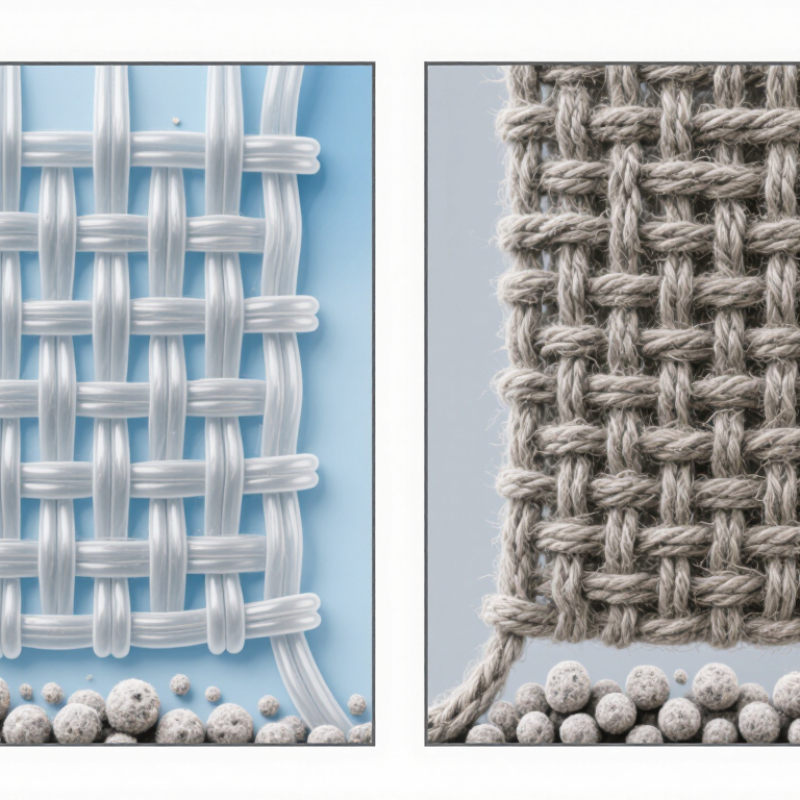
Filter cloth performance begins with the yarn structure. Monofilament yarn uses one continuous filament, much like a thin, smooth wire. Woven into cloth, it creates relatively open, consistent passages between yarns. The smooth surface can help solids release during cake discharge and makes rinsing less difficult. That matters.
Multifilament yarn consists of many fine filaments twisted or bundled together. These smaller strands create a more textured surface and can capture fine particles effectively. In a woven cloth, however, the spaces between filaments may hold particles or moisture. Cleaning can take more effort, especially when the process produces sticky or compressible solids. Not always.
The choice depends on more than yarn count. Weave pattern, polymer, opening size, and finishing all change how cloth drains and releases cake. For example, a coarse mineral slurry may benefit from a durable, open monofilament structure, while a fine suspension may need the tighter capture associated with multifilament yarn. These are starting points, not fixed rules. It is tempting to treat yarn type as the whole answer, but that shortcut can mislead. Compare samples under the actual feed, pressure, and wash conditions, then inspect blinding and cake release over repeated cycles. A small test can reveal what a specification sheet cannot.
Mono and multifilament cloths can look similar on a roll, but their yarns behave differently under flow. Monofilament yarns are single, smooth strands. Their open weave often sheds cake more readily and cleans with less effort. Multifilament yarns bundle fine fibers, creating more surface texture and pathways where particles can lodge. That can improve cake anchoring, but may also increase residual buildup.
The difference is practical. A smooth monofilament cloth may suit processes that need frequent washing and stable drainage. A textured multifilament cloth may help capture fine solids, though blinding can become a problem. It depends. EPA’s 2003 Fabric Filter fact sheet reports typical collection efficiencies of 99–99.9% for fabric-filter systems; that figure describes whole systems, not a guaranteed result for either cloth type. ISO 11057:2011 provides a test method for comparing cleanable filter media, including pressure drop and dust-release behavior. Ask suppliers for those test conditions, not just a nominal micron rating. Then compare results using your slurry, temperature, and cleaning cycle. A lab result can still mislead. Real process variation—especially changing particle size—may shift performance.
Monofilament cloth uses smooth, single-filament yarns that form more regular openings. Multifilament yarns bundle finer strands, creating a more tortuous path for liquid and particles. In practice, a tighter-looking weave does not guarantee better retention. Test the actual slurry: particle shape, pressure, and cloth tension all change results.
Compare measured data, not weave labels. ASTM D737-18 measures textile air permeability under a stated pressure difference; ISO 11057:2011 evaluates cleanable filter media through filtration and cleaning cycles. These methods help standardize comparisons, but neither predicts every slurry’s performance. For a fair trial, record filtrate clarity, flow rate, pressure, and residual cake mass under the same operating conditions. Small details matter.
Cake release often favors smooth monofilament surfaces, which can shed damp solids more readily. Multifilament cloth may hold fine particles well, yet retain residue between yarn strands. That can slow cleaning. A cake that looks dry may still cling at the cloth edge. That assumption can fail. Consider weighing the cloth before and after washing, then inspecting it under consistent lighting. Select the fabric that meets retention needs without forcing excessive pressure or frequent cleaning; there is no universal winner.
Monofilament cloth uses single, smooth filaments, so cake release is usually easier and washing is more effective. It suits processes where blinding is costly, such as mineral concentrates, chemical slurries, and repeated batch filtration. The U.S. EPA’s 2022 Clean Watersheds Needs Survey documents substantial wastewater infrastructure needs, but it does not compare cloth types; plant-level trials remain essential. For measurable comparisons, use air permeability and pore-size data, following ASTM D737 and ASTM D6767. Numbers matter.
Multifilament cloth uses bundled fibers that create a more tortuous path for particles. It can capture fine solids and form a clear filtrate, making it useful for polishing duties or slurries with small, compressible particles. The trade-off is real: retained solids can lodge between fibers, slowing cleaning and shortening stable run time. In practice, a cloth that improves filtrate clarity may still lose on cycle time or wash-water demand. I would not choose by micron rating alone; slurry chemistry and cake behavior can overturn a neat lab result.
Tips: Test both cloths with the actual feed. Record filtrate clarity, cake moisture, cycle time, and cleaning effort across several runs. Check ASTM-based permeability data, then inspect the cloth after washing. A small pilot beats a confident guess.
2026 Best Mono vs Multifilament Filter Cloths Explained
How to Choose Filter Cloth for Your Process in 2026
Choose cloth from the process outward: slurry particle size, solids concentration, operating pressure, and cake-release needs matter more than the fabric label. Monofilament yarns create a more open, stable weave. They often suit coarse particles and sticky cakes that need easy release. Multifilament yarns have finer, softer strands that can capture smaller solids, but may blind more readily. No cloth wins every cycle.
Compare measured data, not sales descriptions. ASTM D737 air-permeability test reports quantify airflow through fabric at a defined pressure; ASTM D3786 reports bursting strength. These figures help screen candidates, but they do not predict your exact filtrate clarity or cycle time. Ask for pore-size data, chemical compatibility, and results from a representative slurry trial. Record filtrate turbidity, cake moisture, cycle duration, and wash performance. Small details count: a cloth that releases cleanly after one cycle may blind after several.
For a coarse mineral slurry, trial a monofilament option first; for fine solids, compare a tighter multifilament weave. Treat that as a starting point, not a rule. Feed variation can overturn the result. Even a carefully chosen cloth may need adjustment after real production runs.
Compare typical construction-level tendencies to help shortlist a filter cloth for your process.
Scores show qualitative tendencies on a 1–5 scale, not standardized test results. Monofilament cloth generally has a smoother surface and more consistent openings, which can support cake release and cleaning. Multifilament yarns create a more tortuous path that can improve fine-particle retention, but may be more prone to blinding. Actual performance depends on fabric construction, particle size, slurry, and operating conditions; confirm your choice with supplier data and process trials.
Monofilament uses smooth, single strands with more regular openings. Multifilament bundles fine strands, creating more textured paths for particles.
Monofilament often sheds damp cake more readily. Smooth yarns leave fewer places for residue to lodge. Still, cake edges can cling.
No. Its textured yarns may capture fine particles, but can also retain residue and blind more quickly. Test your slurry.
Consider particle size, solids concentration, operating pressure, and cleaning needs. A coarse mineral slurry may behave differently from fine solids.
Run them under the same conditions. Record filtrate clarity, flow rate, pressure, cake moisture, and cleaning performance.
It helps screen materials, but cannot predict every slurry’s clarity or cycle time. Real process variation can change the result.
Weigh it before and after washing, then inspect it under consistent lighting. One clean-looking cycle is not proof.
No universal winner exists. Treat initial recommendations as starting points, then review results after several production cycles. Feed changes can overturn them.
This guide explains what is the difference between mono and multifilament filter cloths by looking at how their yarns are constructed and how weave and fiber design shape filtration performance. Monofilament cloth uses individual, continuous strands that create relatively open, consistent passages, while multifilament cloth is woven from bundles of finer fibers that form a more intricate surface. These structural differences can affect particle retention, liquid flow, resistance to blinding, and how easily a filter cake releases.
The article compares the strengths of each cloth type and the applications where it may perform best, from processes that prioritize clean release and stable flow to those requiring finer particle capture. It also outlines practical factors for choosing a filter cloth in 2026, including the material being filtered, target filtration level, operating conditions, cleaning needs, and equipment compatibility. The goal is to help readers match cloth construction to process requirements rather than choose by material or weave alone.
Jovios Equipment