Professional Solutions for Ceramic Membranes
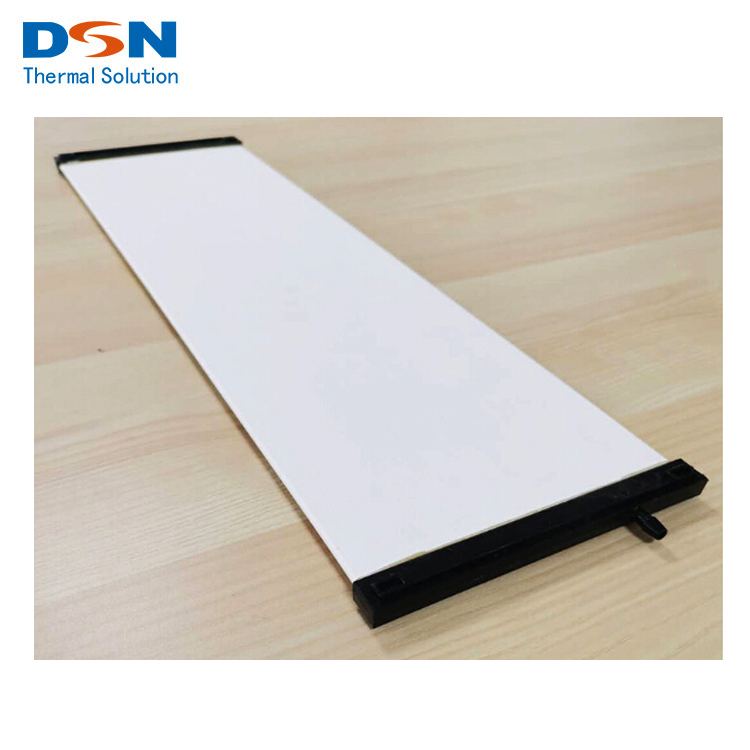
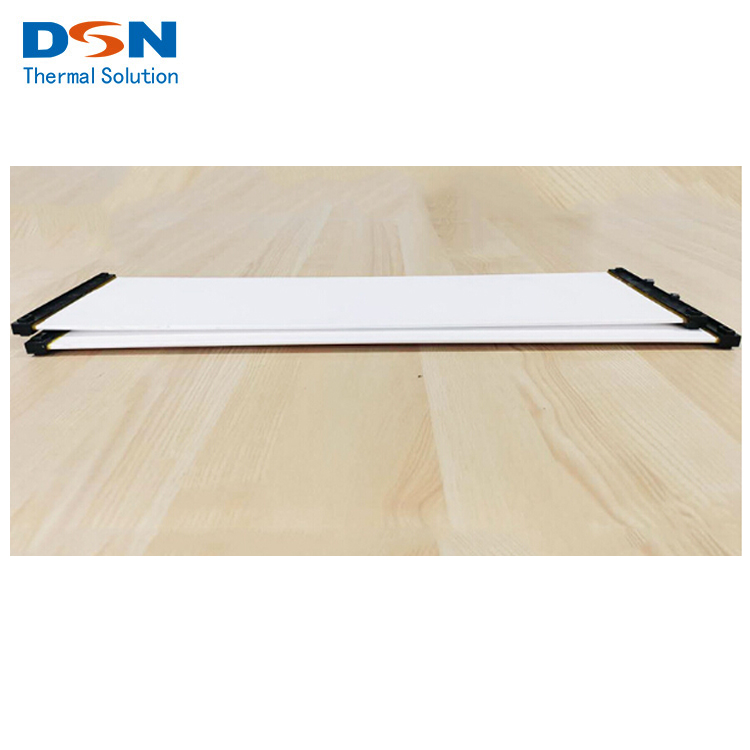
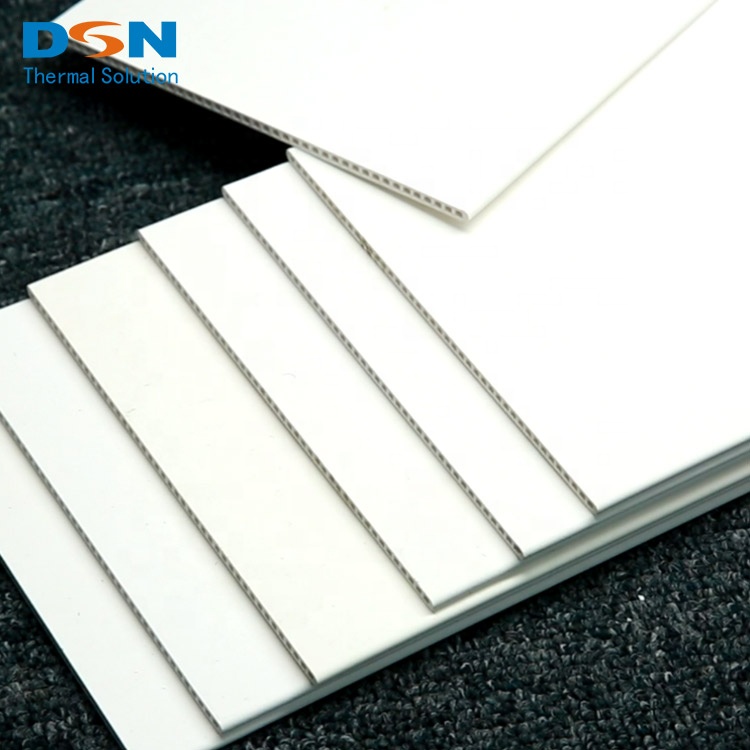
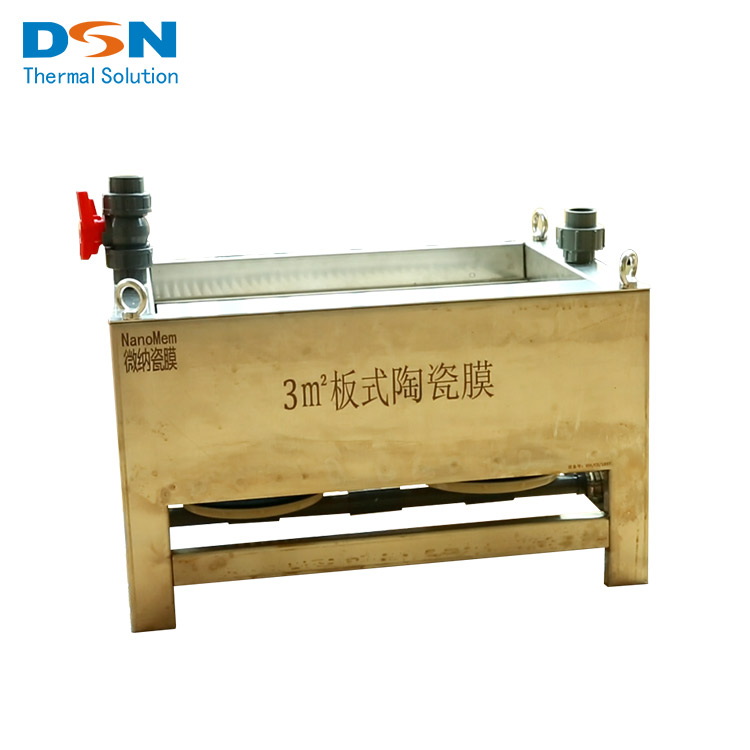
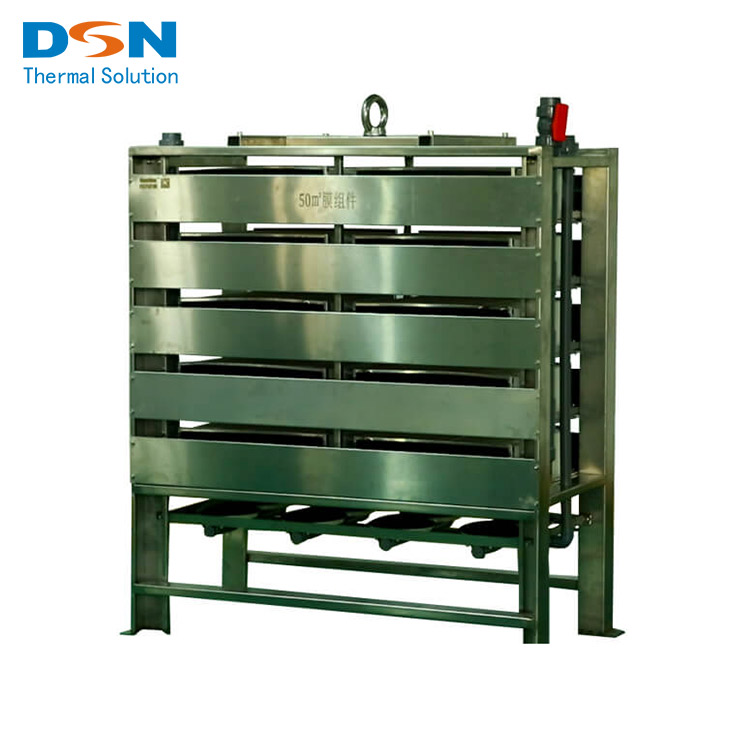
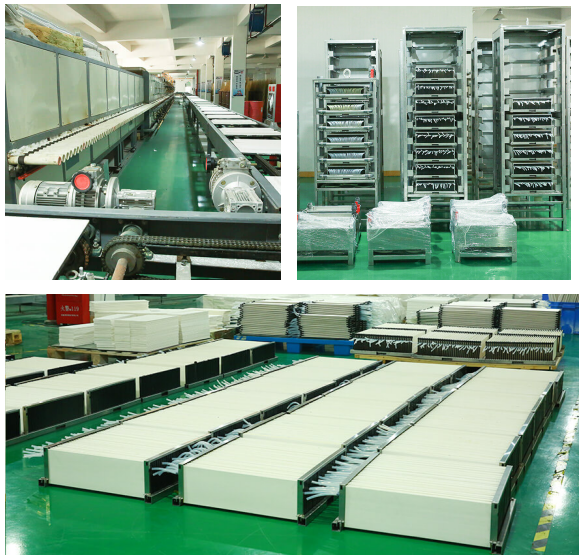
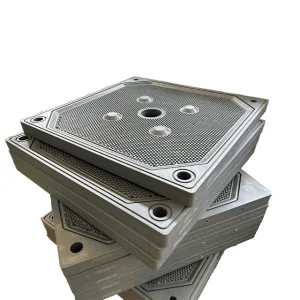
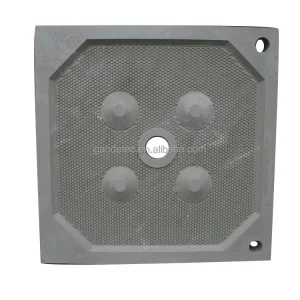
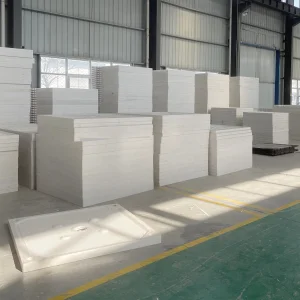
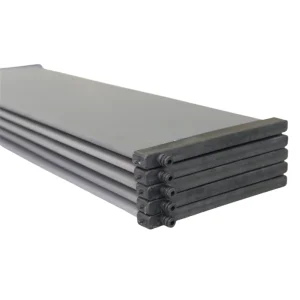
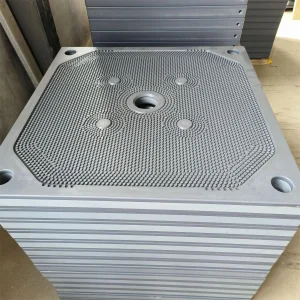
We are an expert in ceramic membranes for separation and reaction; we provide the filtration membrane to meet various specific requirements. The annual production of our factory is one million square meters.
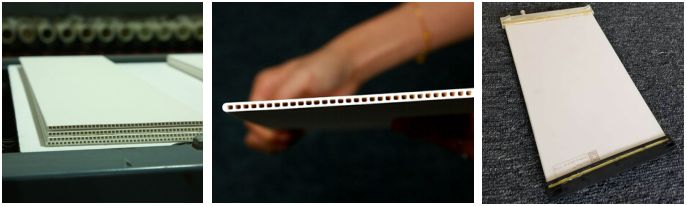
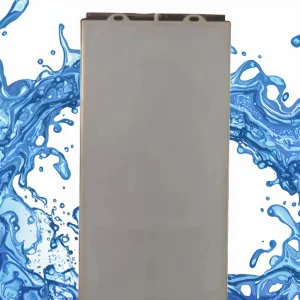
Parameters of Ceramic Filtration Membrane Sheet
| Model |
PCFM-A-20-3-U |
PCFM-A-50-3-U |
PCFM-A-100-3-U |
PCFM-A-1U-3-M |
| Formation |
Plate |
| Filtration |
Negative pressure suction filtration |
| Materials |
Alpha-Al2O3 |
| Water channel, pcs |
43 |
| Dimension, mm |
W150 × H510 × T4 |
| Membrane area, m² |
0.15 |
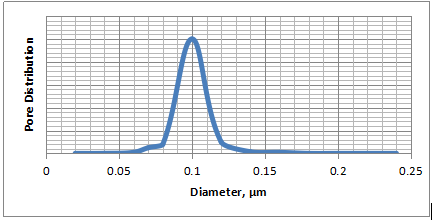
| Nominal pore size, µm |
0.02 |
0.05 |
0.1 |
1 |
| Porosity, % |
30% |
34% |
35% |
40% |
| Pure water flux m³/(m².d) |
20 |
20 |
100 |
200 |
Note: If there are different requirements on membrane materials, size, or filtration precision, please inquire for details.
Characteristics of Ceramic Membrane
- Material Excellent: High corrosion resistance, high strength, heat resistance, suitable for solvent or oil and various types of drainage.
- Long Service Life: Longer service life compared with hollow fiber membranes, resulting in the lowest full-life cost.
- Energy Saving: Membrane surface is resistant to staining with efficient replacement structure design.
- Maintenance Free: Automatic control system significantly reduces daily maintenance requirements.
Membrane Comparison (Ceramic vs. Organic vs. Fiber)
| Feature |
Ceramic Membrane (S) |
Flat Organic Membrane |
Fiber Membrane |
| Floor space, m² |
0.3 |
1.8 |
0.81 |
| Sewage flux, L/m²h |
120 |
25 |
25 |
| Daily capacity, ton/d |
120 |
88.5 |
68.84 |
| Volume capacity, ton/m³ |
200 |
14.05 |
43.79 |
Comparison of Membrane Cleaning Methods
| Cleaning Method |
Ceramic Membrane (S) |
Hollow Fiber |
Flat Organic |
| Aeration Cleaning |
○ (Excellent) |
△ (Limited) |
- |
| Backwashing |
○ (Applicable) |
○ (Applicable) |
× (Not Possible) |
| Chemical Backwashing |
○ (High Resistance) |
○ (Limited) |
× (Not Possible) |
| High Pressure Cleaning |
○ (High Strength) |
× (Not Possible) |
× (Not Possible) |
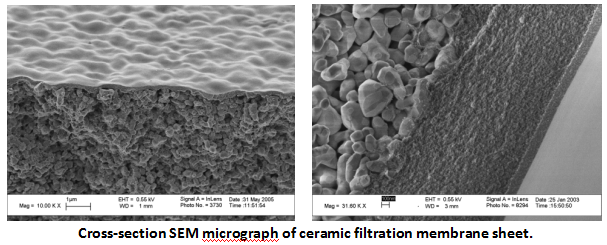
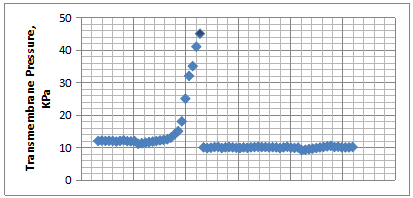
Micrograph and Trans-membrane Pressure (TMP)
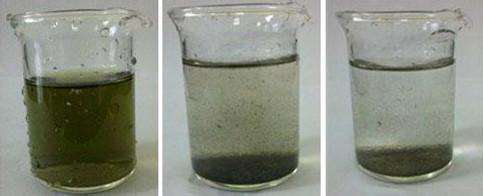
The trans-membrane pressure (TMP) of the ceramic filter membrane is 50% lower than that of organic membranes, allowing for quick flux recovery through simple cleaning.
Hydrophilic Advantage
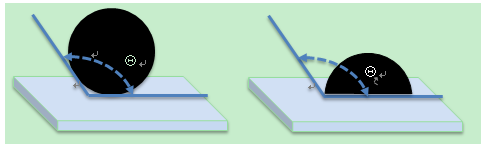
Ceramic materials are inherently hydrophilic. Water spreads easily on the surface, making it more conducive to efficient sewage separation compared to hydrophobic organic materials.
Water Temperature Calibration
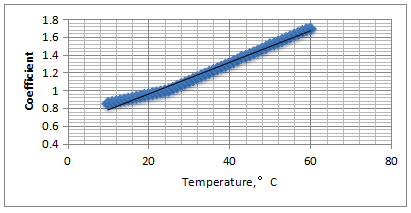
The calibration coefficient is set to 1 at 25℃. The actual design flux is determined by the nominal flux at 25℃ multiplied by the temperature correction coefficient.
Product Applications
- Petroleum and oily wastewater treatment
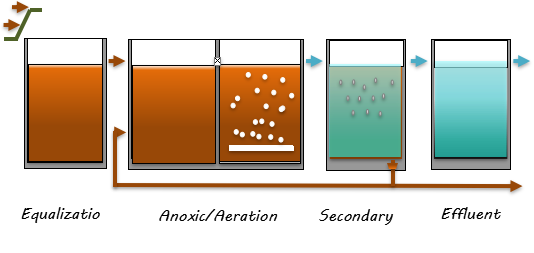
- Industrial and municipal sewage treatment
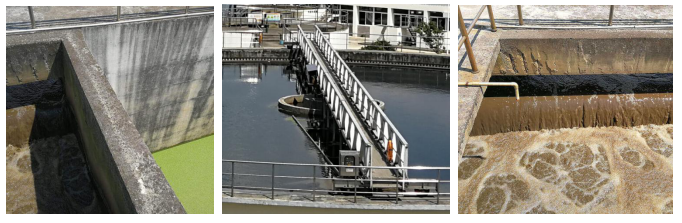
- Landfill leachate & Aquaculture wastewater
- Drinking water purification
- Seawater desalination pretreatment
- Food processing filtration
Certificates & Innovation
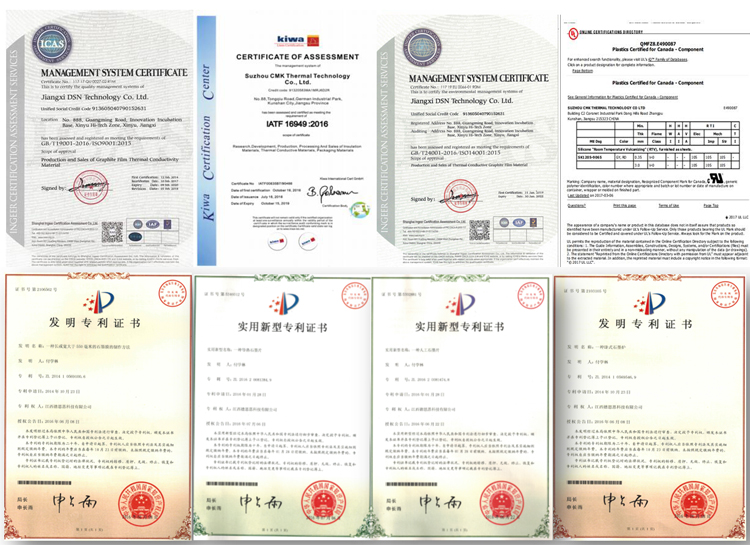
Compliant with ISO9001-2015, ISO14001-2015, IATF16949-2016, and UL. We hold more than 30 invention patents and have been recognized as a "national high-tech enterprise."
Frequently Asked Questions
What are your payment terms?
For amounts ≤1000USD, 100% in advance. For amounts ≥1000USD, 30% T/T in advance, with the balance due before shipment.
What is the typical delivery time?
Delivery usually takes 20 to 30 days after all order details are confirmed.
Do you test all products before delivery?
Yes, we conduct thorough testing on all goods prior to shipment to ensure quality.
Is there a warranty provided?
We offer a one-year warranty from the date of delivery. If any non-wearing parts fail under proper operation, we provide replacements at no cost.
Why choose ceramic membranes over organic membranes?
Ceramic membranes offer higher strength, better corrosion resistance, longer service life, and 50% lower trans-membrane pressure (TMP), making them more cost-effective in the long run.
Can the membranes be cleaned with high pressure?
Yes, ceramic membranes are highly durable and support high-pressure water cleaning to remove solid fouling, which is not possible with fiber or organic membranes.
 Jovios Equipment